
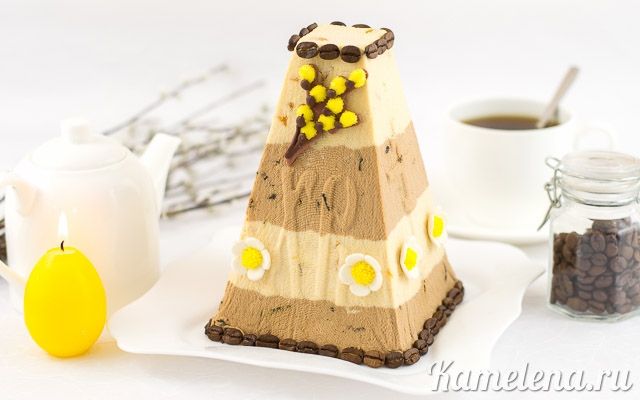
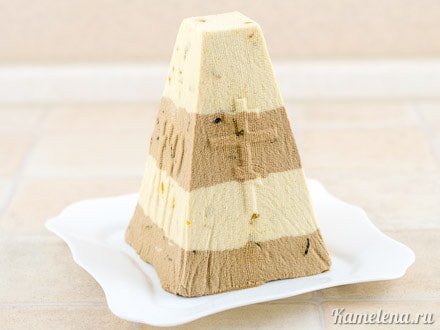
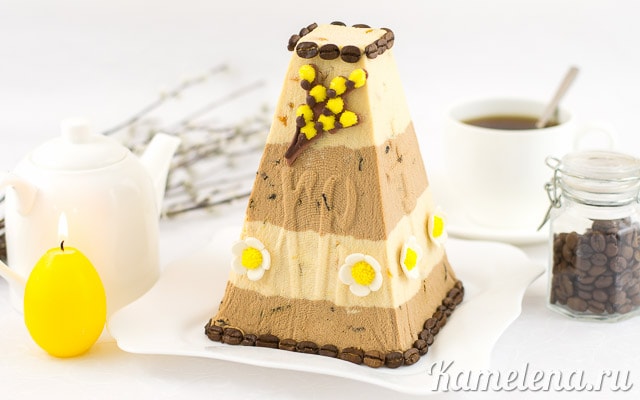
Easter is just around the corner, and I'm back with another Easter dish! If you remember, last year I made — Easter cake made from milk (no cottage cheese), which is prepared differently from a classic Easter cake — instead of cottage cheese, it's based on homemade curd made from milk. The taste is dramatically better! Well, that same curd can be made not only from milk but also from ryazhenka (and other fermented dairy products) — the method is the same: heat it and strain off the whey. I took it a step further and decided to make this Easter cake two-toned as well — 2 in 1. The light part has dried apricots and lemon zest, and for the dark part I used a flavor combination from my favorite ice cream — Coffee Ice Cream with Prunes — adding prunes, coffee, and chocolate. The result was absolutely delicious! Just imagine — a wonderfully tender, soft, melt-in-your-mouth creamy Easter cake with a rich, buttery flavor and a beautiful aroma carrying a subtle hint of coffee and chocolate!
Ingredients:
- 1.5 l ryazhenka (fermented baked milk)
- 0.5 l milk
- 200 g sour cream (+ 100 g)
- 200 g butter
- 120 g powdered sugar
- 10 g vanilla sugar
- Light layer:
- 70 g dried apricots
- lemon zest
- Dark layer:
- 70 g prunes
- 30 g dark chocolate
- 1 tsp coffee (leveled)
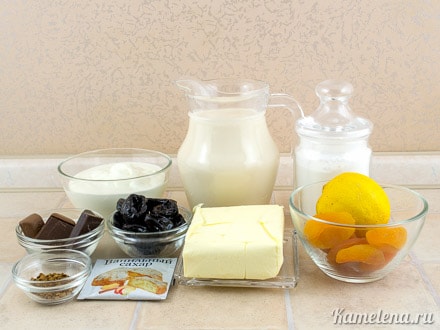
How to cook two-tone ryazhenka easter cake
I used 4% ryazhenka, 2.5% milk, 20% sour cream, and 82% butter. Traditional Easter cakes always call for full-fat or even extra-rich dairy — I definitely wouldn't recommend using low-fat products, because the taste will unfortunately suffer quite a bit. Combine the ryazhenka, milk, and sour cream (200 g) in a heavy-bottomed pot.
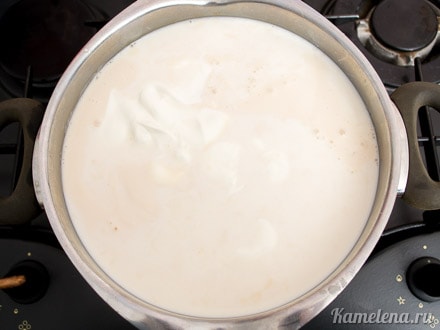
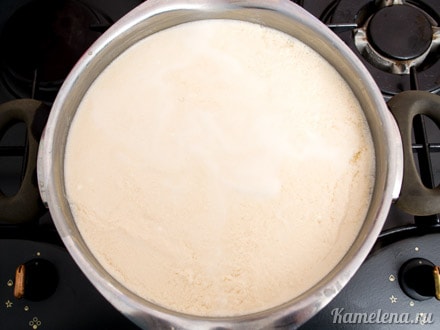
Heat to a high temperature — but do not boil — until the mixture separates into curds and whey. Do not let it boil, or the curds will turn tough! If needed, you can add a little lemon juice, but with fermented dairy products this is usually unnecessary — they curdle just fine on their own. Let it sit undisturbed for 20–30 minutes — do not stir (!).
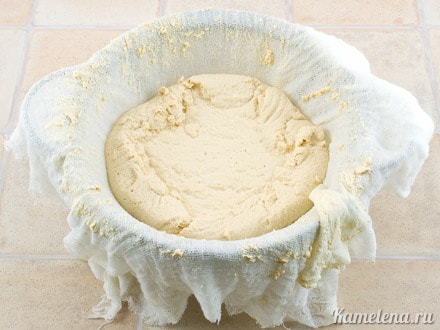
Set a colander over a bowl and line it with cheesecloth folded into two layers. Pour in the mixture and let it drain for 2–3 hours. I ended up with 520 g of curd.
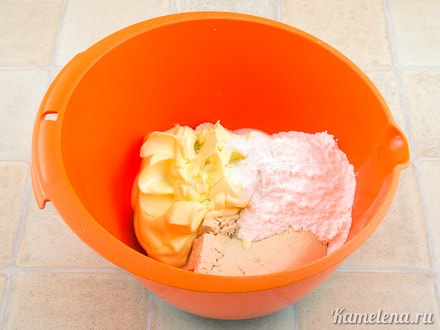
Transfer the curd to a mixing bowl and add the softened butter, vanilla sugar, and powdered sugar (not all of it at first).
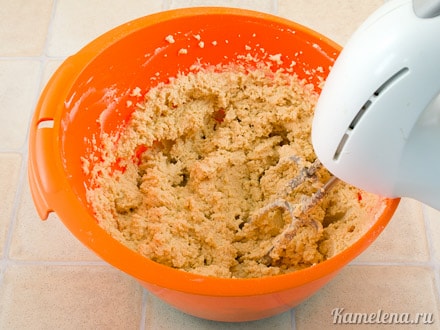
Add 100 g or more of sour cream — the mixture should be a pleasant creamy consistency, not runny but also not too thick or dry. Taste it and adjust as needed: add more powdered sugar, more sour cream, or a splash of lemon juice if you like. The base for the Easter cake is ready.
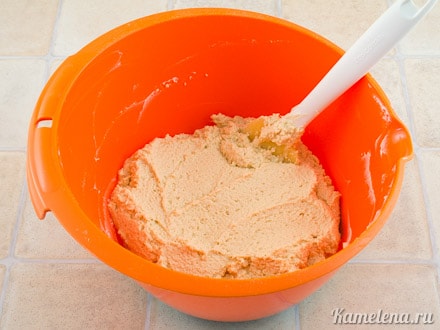
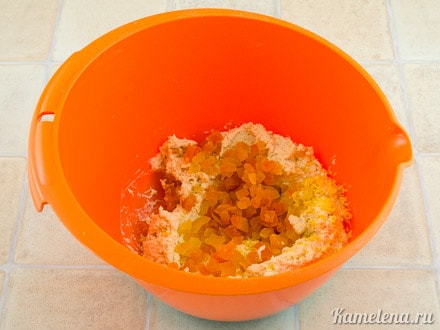
Divide into two portions. Mix one portion with the zest of 1 lemon and finely chopped dried apricots.
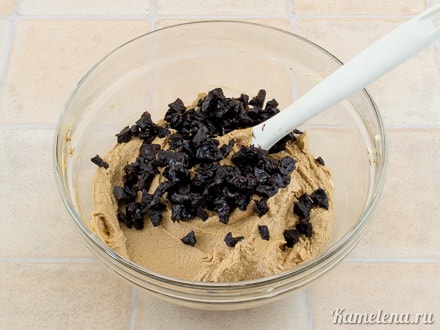
Mix the second portion with coffee dissolved in 2 tsp of hot water, melted chocolate, and finely chopped prunes. Of course, this split is entirely optional — you can simply fold in any dried fruit or candied fruit you like. Even just plain raisins will give you a delicious Easter cake.
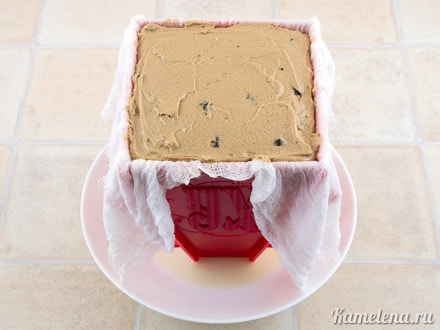
Line a paskha mold with damp cheesecloth folded into two layers and place it over a plate to catch the draining whey. If you don't have a paskha mold, you can use a colander or a large plastic bottle with a few holes poked in the bottom. Spoon in the mixture. I layered it as follows: some of the white, some of the dark, more white, then the remaining dark. Fold the edges of the cheesecloth up over the top, press down with a plate, and place a liter carton of milk or juice on top as a weight. Refrigerate for at least 12 hours.
Comments