
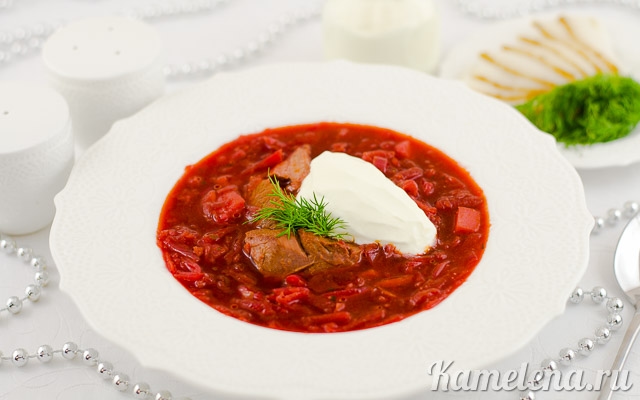
People have been asking me for a borscht recipe for a long time, and I kept putting it off — it seems like everyone already knows how to make it. Well, here it is, right on the eve of Valentine's Day, and I'm bringing you this delicious soup. Why not? Men are practical creatures, and many of them would choose a bowl — or two — of hearty, satisfying borscht over a heart-shaped cake any day. Besides, borscht is also "a passionate shade of red," so I'd say my timing is just right!)) I think it goes without saying that there are more variations of borscht than you could ever count. Every region of Russia, Ukraine, and Belarus has its own version. Even the Poles, Lithuanians, Romanians, and Moldovans have their own take on it. There are really no hard rules when it comes to borscht — except that it must contain beets. Everything else is up for interpretation. Every cook has their own borscht! So today I'm sharing my version — the way I make it, the way my husband, my child, and I love it!
Ingredients:
- 700 g beets
- 400 g green cabbage
- 200 g potatoes
- 200 g carrots
- 200 g onion
- 250 g beef (pork, or chicken)
- 130 g tomato paste
- 30 g butter or clarified butter
- 3 tbsp vegetable oil
- garlic
- salt, pepper
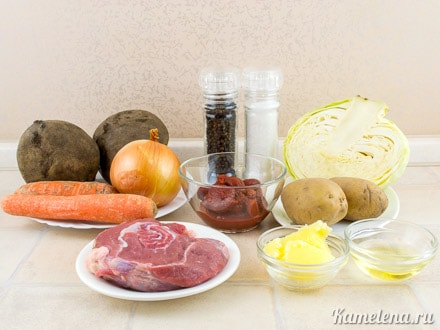
How to cook borscht
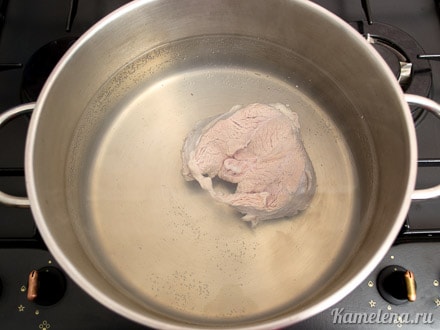
There are three things that make my borscht unique. First — I make it quite thick, I'd even say very thick. Second — I add a lot of tomato paste and a lot of beets; the beets weigh significantly more than any other vegetable. Third — I use very little potato. That's about it. I make it with beef, pork, or chicken — it doesn't matter, it'll be delicious either way. This time I used beef. You don't need a large piece of meat. You can also make borscht with just water, by the way. Let's get started. Rinse the meat, cover with 2.5 liters of water (or 3 liters for a thinner version), bring to a boil, and cook until half done (for beef, that's at least 1–1.5 hours; for pork or chicken, much less).
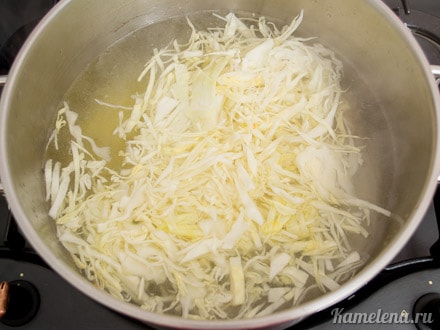
Then add the potatoes, cut into small cubes, and the green cabbage, shredded very thinly. Season with salt and pepper. Cook for 20–30 minutes, or until the potatoes are tender. If you're using young cabbage, add it a little later.
At the same time you add the potatoes and cabbage, start making the sauté. Heat the butter (or clarified butter) and vegetable oil in a skillet. Add the onion and cook for 5 minutes.

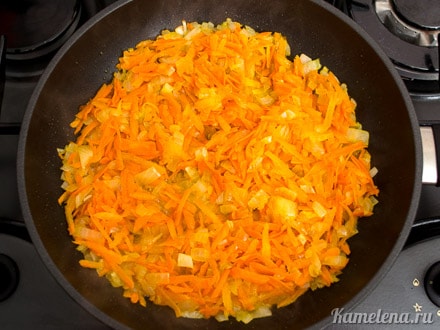
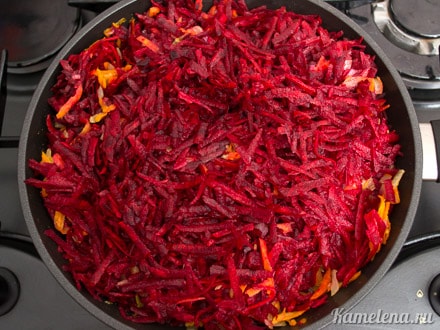
Immediately follow with the tomato paste, diluted with a few spoonfuls of water. I use a thick tomato paste with 25% concentration — made with tomatoes only. If you prefer a less pronounced flavor, feel free to use less tomato paste.
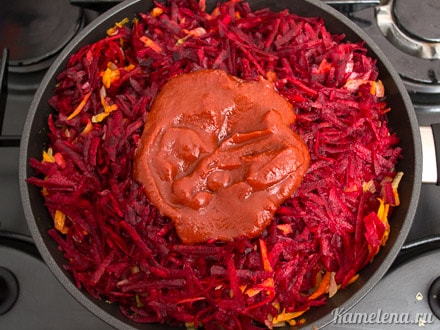
Stir everything together, add a little more water, and simmer on the lowest heat, covered, for 20 minutes. If your skillet is small and shallow, sauté the onion and carrots first, then do the beets and tomato paste in a second batch. Simmering the beets with tomato paste beforehand helps them keep their vibrant color. You'll often see recipes that call for vinegar to achieve this, but there's really no need — the tomato paste already contains plenty of acid.
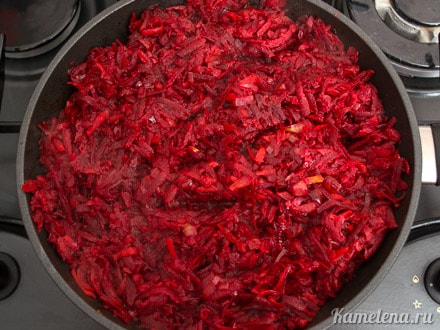
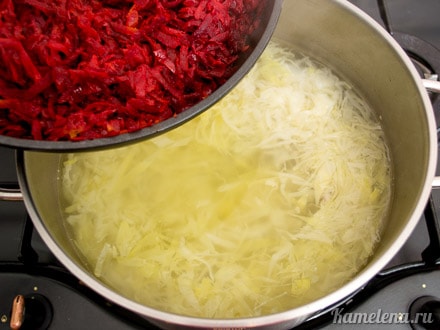
Cook on the very lowest heat, covered, for 20–30 minutes. The borscht should not be at a rolling boil — it should gently simmer, barely (!) bubbling. Shortly before turning off the heat, add 1–2 cloves of minced garlic or dried garlic. Adjust salt as needed.
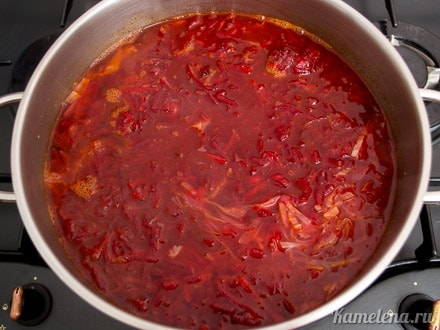
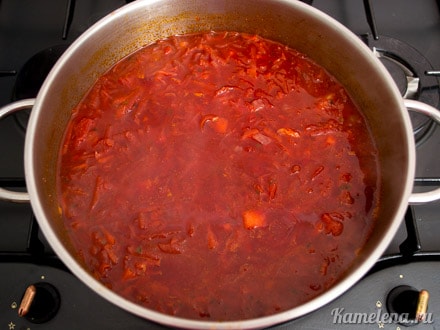
Ideally, let the borscht rest and steep for a while, but you can also serve it right away. This makes 3.5 liters, or 4 liters if you go with the thinner version.
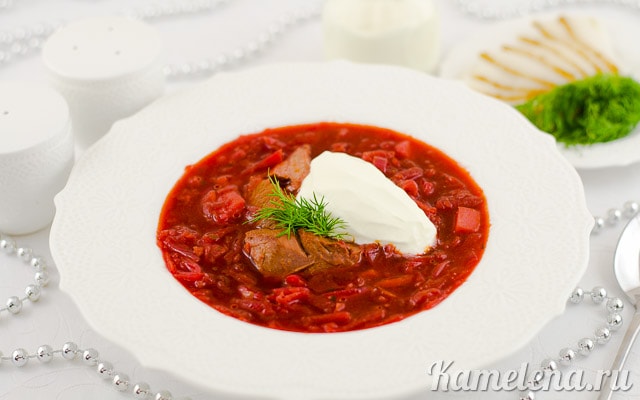
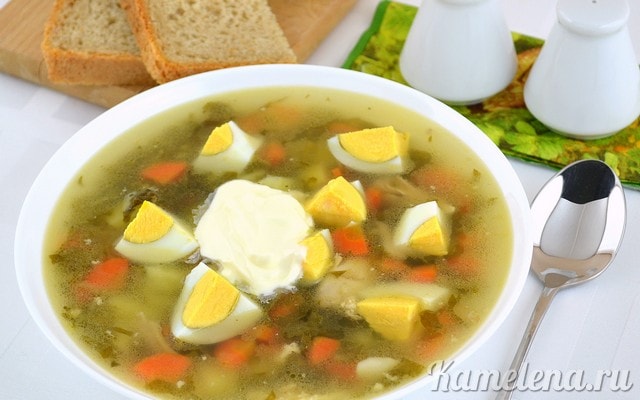
Serve with a generous dollop of sour cream, and on a separate plate — thinly sliced cured pork fat (the ultimate touch is to slice it straight from the freezer), along with dark rye bread, as desired. Rich, hearty, and deeply flavorful, borscht is hard to resist — personally, I've never met anyone who could)) It really is incredibly good!
Comments