
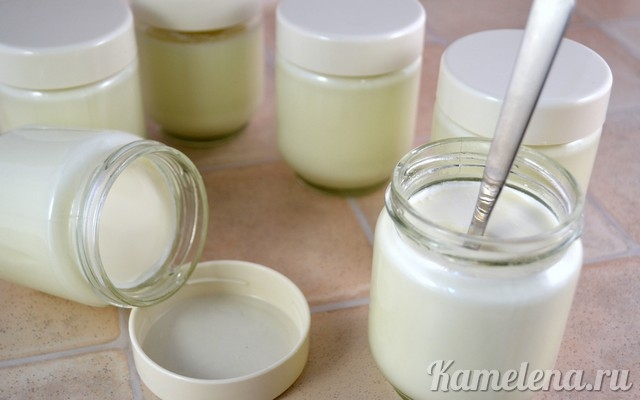
You will also need a yogurt maker (a kitchen appliance that maintains the required temperature inside). The milk should be sterilized or ultra-pasteurized (long-shelf-life milk). If you are using fresh farm milk or pasteurized milk, you must first bring it to a boil and then cool it to room temperature (68–86°F / +20…+30°C). When making yogurt, use only clean equipment! It is recommended to scald everything with boiling water before use — this includes the mixing bowl, the stirring spoon, and the yogurt maker jars. Suitable options for the plain yogurt starter: 1) Dry yogurt starter culture (available at a pharmacy or specialty store). 2) Finished yogurt previously made from a dry starter culture (as in this recipe). 3) As a last resort, plain yogurt with no additives from the store (choose the freshest one available by production date). If you are using a dry starter culture, fill the vial halfway with room-temperature boiled water, cap it, and shake until the culture is fully dissolved.
Ingredients:
- 1 liter milk
- plain yogurt (or dry starter culture)
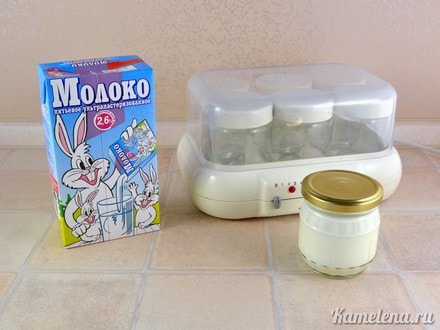
How to cook homemade yogurt in a yogurt maker
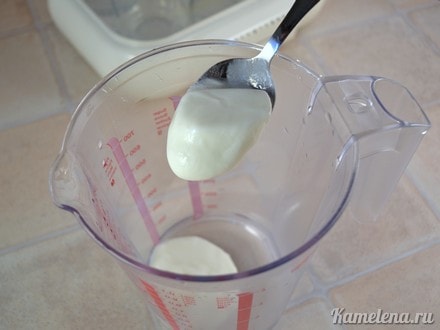
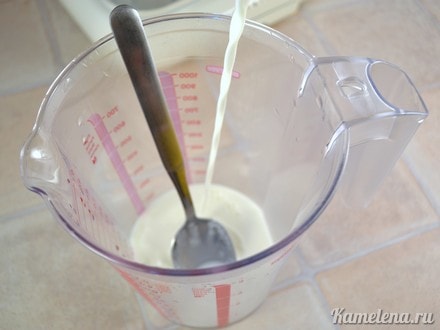
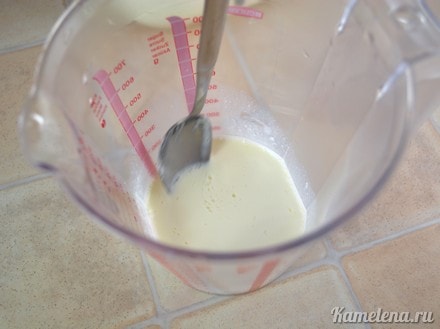
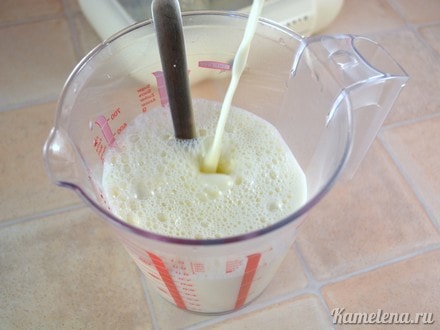
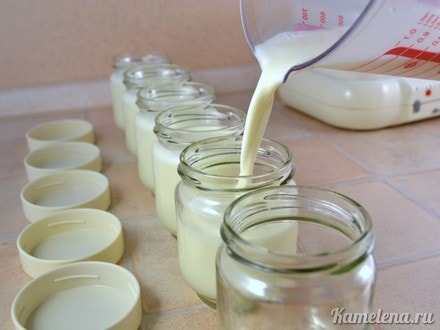
If the instructions for your yogurt maker say not to close the jars with lids — leave them open. I close mine — that's what my yogurt maker's instructions say to do. Place the jars in the yogurt maker and close the lid. Turn the yogurt maker on and start the timer.
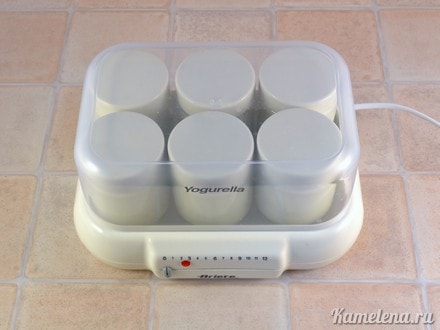
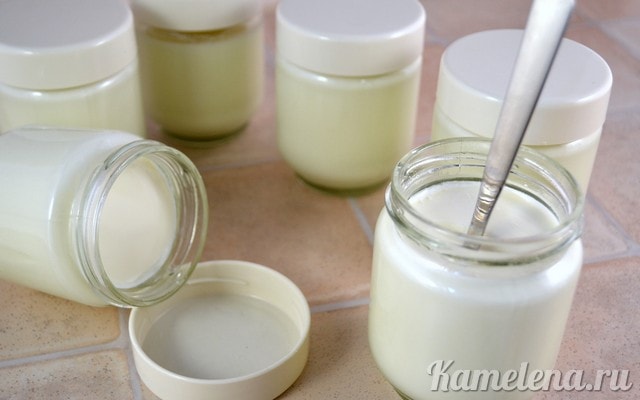
Usually after 6–9 hours the yogurt is ready — it should be quite thick (the time depends on many factors: room temperature, the quality of the milk and starter, and the proper functioning of the yogurt maker). Transfer the jars of yogurt to the refrigerator (this stops the fermentation process and allows the yogurt to set fully). After an hour, the yogurt is ready to eat. Finished yogurt won't pour out of a tilted jar, and a spoon will stand upright in it. You can add sugar, jam, honey, or any fruit and berries to the finished yogurt. My personal favorite is this yogurt with a spoonful of honey.

Comments