
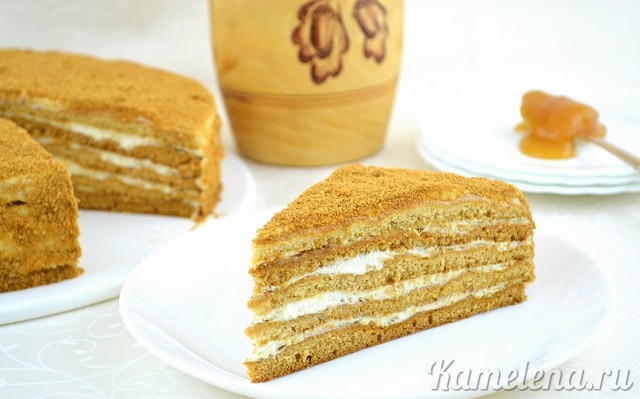
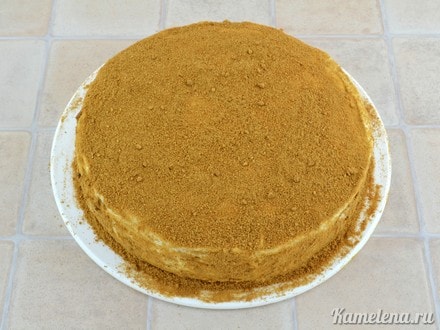
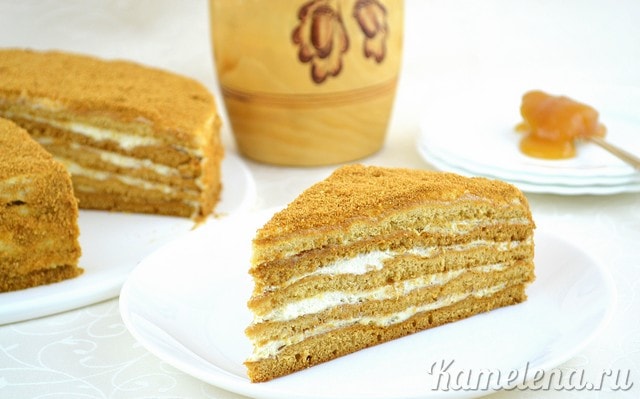
There are countless versions of Medovik honey cake. Some are made with sour cream frosting, custard, buttercream, or a butter-and-condensed-milk cream. I chose to go with sour cream frosting, as I think it makes the most delicious cake — but feel free to use whatever cream you prefer. To keep the layers soft and tender, I used a small amount of flour. Because of this, the layers can't be rolled out with a rolling pin — you have to stretch them out with your hands. Both liquid and thick honey work fine. Just make sure it's good quality, and ideally a dark variety, since dark honey has a richer aroma. You can also mix one of the following add-ins into the cream layer, according to your taste: - rehydrated prunes - rehydrated dried apricots - walnuts Those are the add-ins I've seen in store-bought Medovik cakes, at least. The result is an incredibly tender, delicious cake with soft, well-soaked layers. Medovik has a pronounced honey aroma and literally melts in your mouth. I was 100% happy with how it turned out. The finished cake weighs approximately 1.2–1.3 kg and measures 25 cm in diameter.
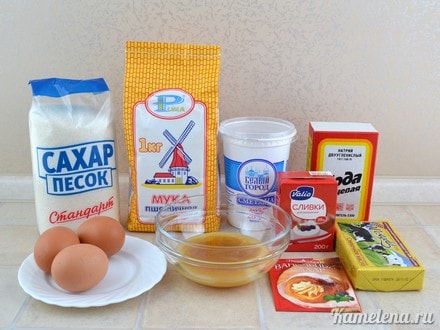
Ingredients:
- Dough:
- 3 eggs
- 150 g honey
- 100 g butter
- 100 g sugar
- 1.5 tsp slaked baking soda
- 350 g flour
- Cream:
- 500 g sour cream (20%)
- 200 g heavy cream (33%-38%)
- 180 g sugar
- 1 packet vanilla sugar (10 g)
How to cook honey cake (Medovik)
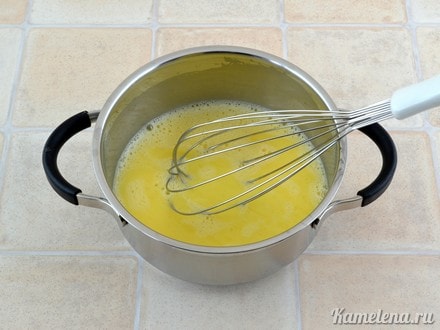
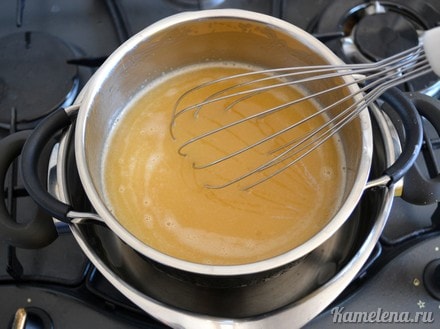
Add the honey, butter, and sugar. Set up a double boiler — place the bowl over a pot of boiling water.
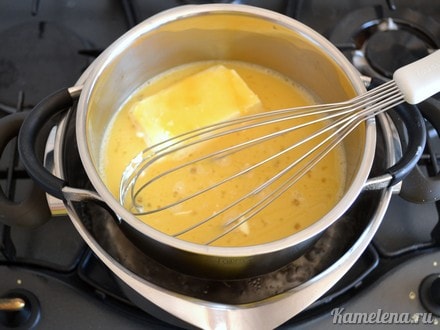
Heat, stirring occasionally to speed things up, until the eggs, butter, and honey come together into a smooth, uniform mixture.
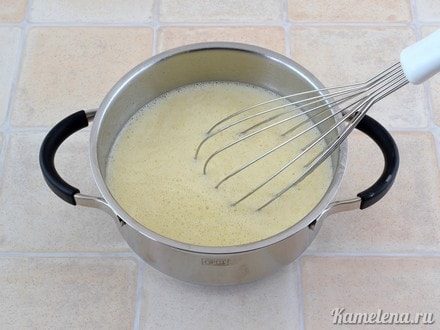
Remove from the heat and add the slaked baking soda. Stir well — the mixture should lighten considerably in color.
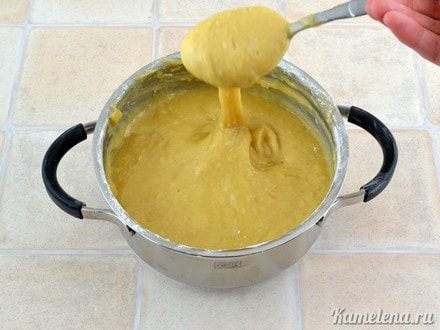
Add the flour in portions, stirring thoroughly with a spoon after each addition. The dough will be warm, sticky, and tacky — that's exactly how it should be. Don't add more flour.
Generously grease a baking sheet with butter. Place 1/5 of the dough (170 g) in the center of the baking sheet. Have a pot lid or large plate about 25 cm in diameter ready to use as a template.
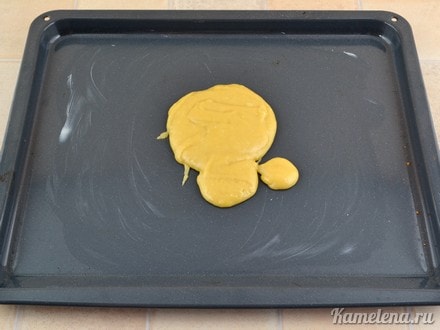
Using gentle hand movements, stretch the dough out into a circle. It will stick to your hand — that's normal.
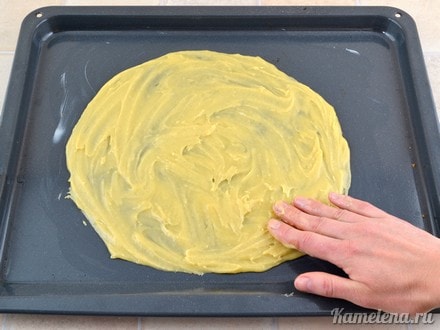
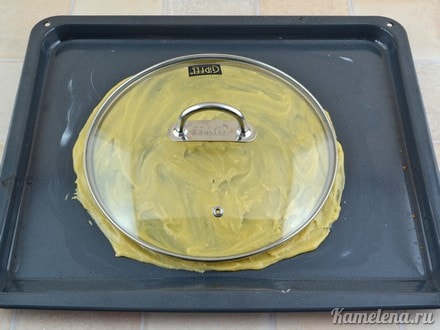
Stretch it into a circle slightly larger than the lid (use the lid as a guide). The more evenly you spread the circle, the more even the layer will be.
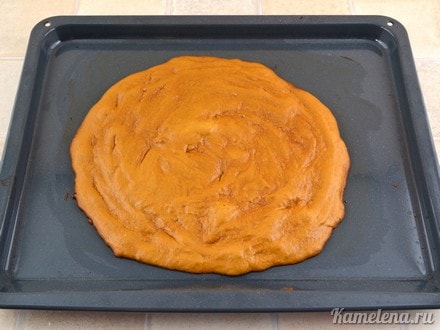
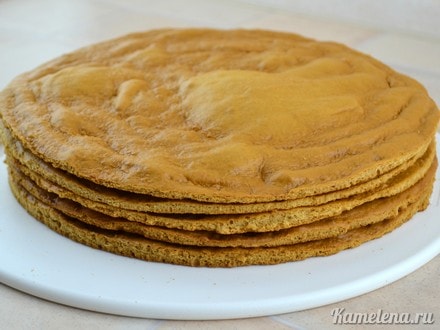
Bake in an oven preheated to 200°C (390°F) for 5–8 minutes (I baked mine for exactly 8 minutes). The layer should turn a deep golden-brown with a reddish hue, but the edges should not get too dark or dry out.
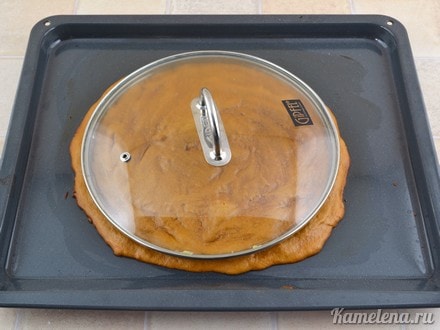
My lid has a sharp edge, so I didn't need a knife — the excess dough separated from the layer easily. If your lid or plate doesn't have a sharp edge, just trace around it with a knife.

Bake the remaining layers the same way (you'll get 5 layers total). Remember to grease the baking sheet with butter each time. It's convenient to use two baking sheets — while one layer is baking, you can stretch out the next one.
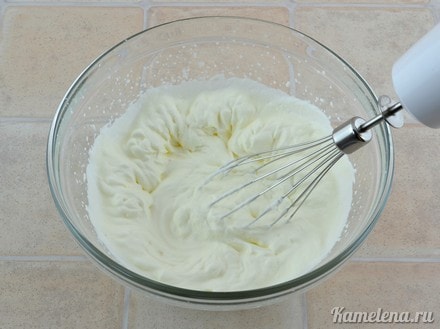
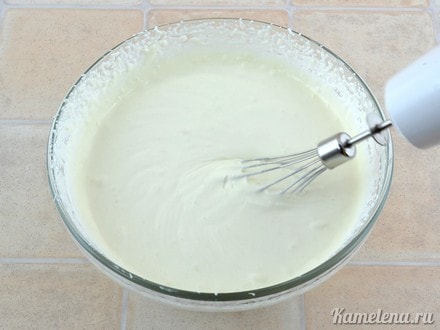
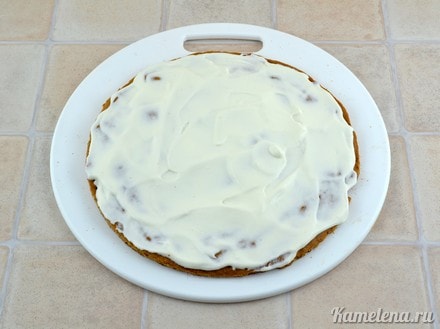
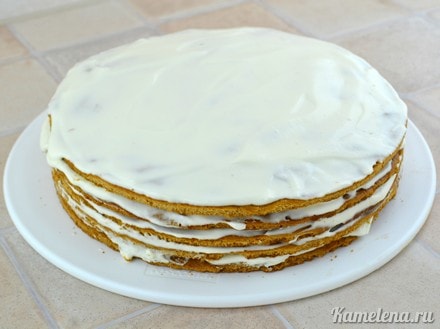
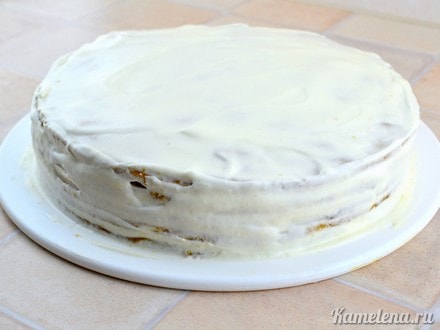
Place the first layer on a large plate or cutting board. Spread approximately 1/5 of the cream over it. The cream layer will be very thick — it will soak into the cake layer later.
Comments