
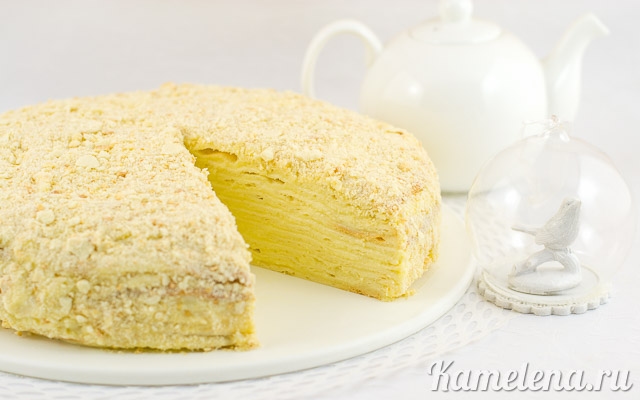
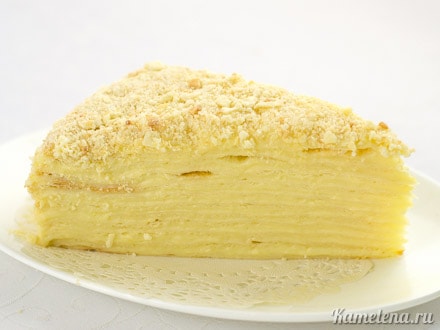
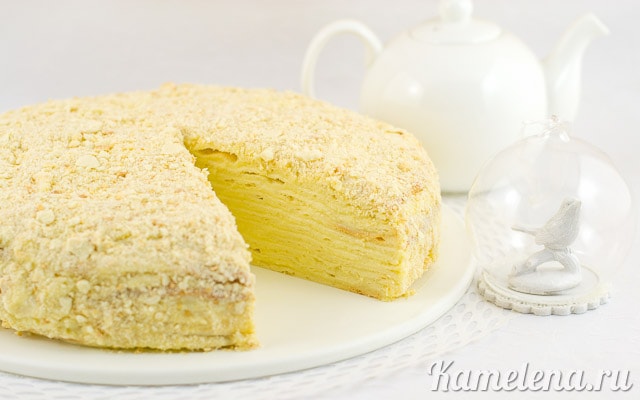
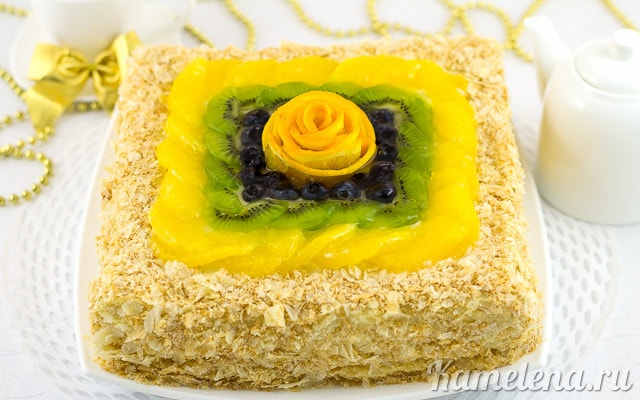
Napoleon is a cake made of many layers soaked in a delicious vanilla cream. There are countless versions of Napoleon — some have crispy layers, others are very soft; the cream is most often a classic custard made with egg yolks, though butter-and-condensed-milk versions exist too. So the word "Napoleon" means something different to everyone who loves this cake. Many of my readers have long been asking me for a Napoleon recipe, and — I'll be honest — my husband has been requesting it for a while too :-) I'm sharing what's known as a "wet" Napoleon: it's very well-soaked, with a generous amount of cream. In the finished cake the layers are not crispy at all — on the contrary, they're so soft they practically melt in your mouth. This Napoleon comes out very tender, rich, and not overly sweet — everything is perfectly balanced. Some Napoleon recipes call for up to 600 g of butter (400 g in the dough, 200 g in the cream); compared to those, the version I'm offering is practically diet food — just 200 g total for the whole cake :-) The cake turns out absolutely delicious — give it a try, and I hope it comes out perfectly for you! P.S. Also check out the second type of Napoleon — Napoleon Cake made with puff pastry.
Ingredients:
- Layers:
- 250 ml milk
- 200 g sugar
- 100 g butter
- 1 egg
- 1 tsp salt (level)
- 1 packet vanilla sugar (10 g)
- 2 tbsp cognac (or vodka, or 6% natural vinegar, or 1 tbsp 9% white vinegar)
- 600–650 g flour
- Cream:
- 1 liter milk
- 200 ml heavy cream (any fat content; I used 20%)
- 250 g sugar
- 100 g butter
- 60 g flour
- 4 egg yolks
- 1 packet vanilla sugar (10 g)
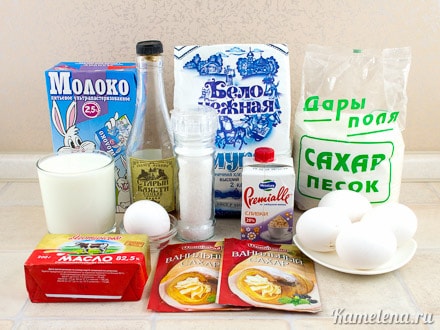
How to cook Napoleon cake
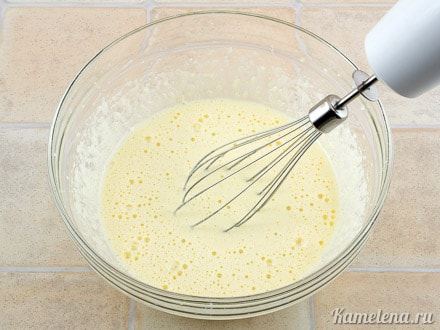
Make the dough. Place the egg, sugar, vanilla sugar, and salt in a bowl and beat well with a mixer until foamy.
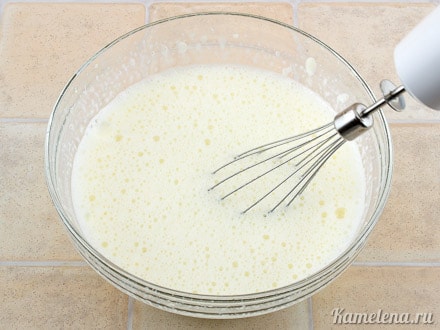
Heat the milk and cubed butter in a small saucepan until medium-hot (hot to the touch but bearable). The butter should be completely melted. Pour the hot milk into the beaten egg while mixing with the mixer at the same time.
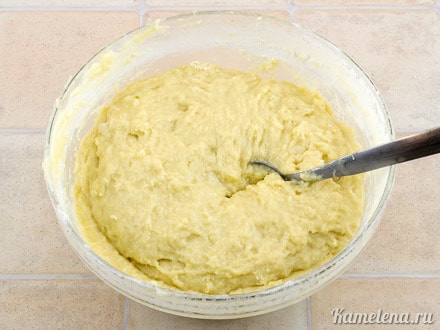
Add the cognac, vodka, or vinegar. These ingredients help leaven the dough during baking, but if you don't have any on hand, that's fine — just skip this ingredient. Gradually add most of the flour, mixing the dough well with a spoon.
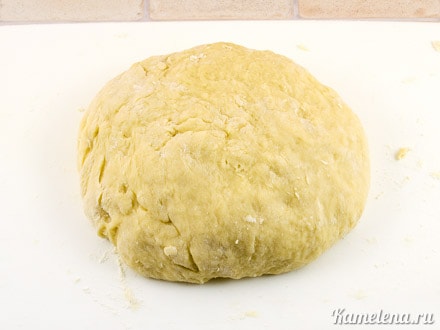
Turn the dough out onto a floured surface and knead until smooth. The dough should stop sticking to your hands and look like a large, soft, pliable ball — but not stiff. You may need more or less flour; I used 630 g.
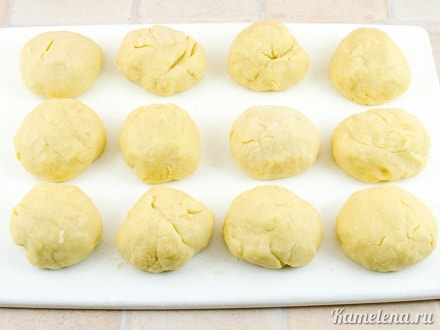
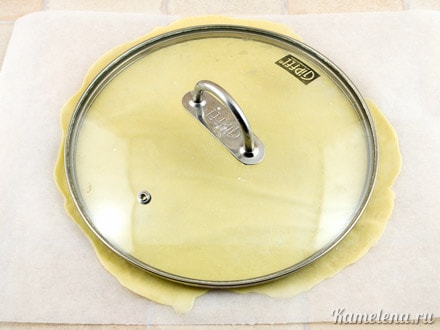
Prepare a lid or large plate about 25 cm (10 inches) in diameter. Roll each ball into a very thin circle, dusting lightly with flour as needed (I rolled them directly on parchment paper).
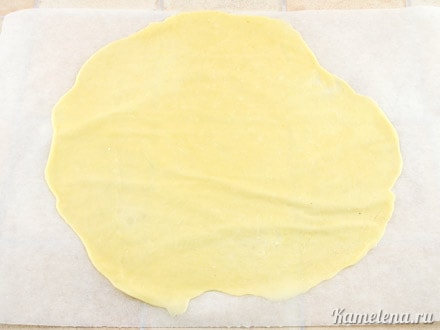
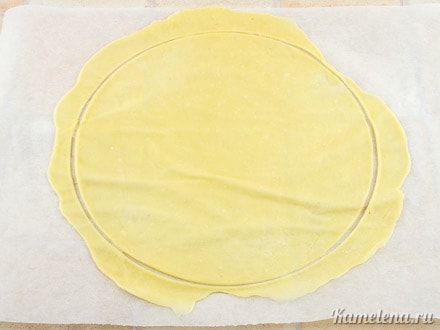
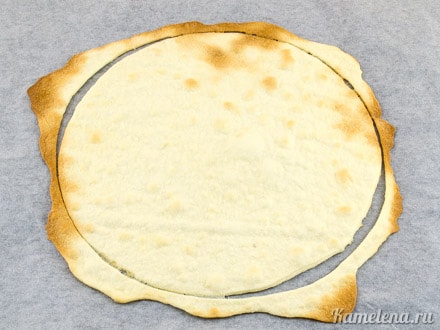
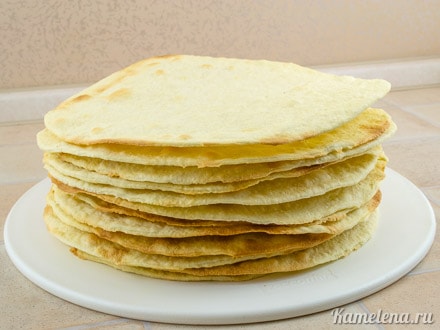
Bake in an oven preheated to 180°C (350°F) for about 3–8 minutes. The layer is ready when a few lightly golden spots appear on it. I baked each layer for 6.5 minutes. While one layer is baking, you can roll out the next one on a separate sheet of parchment.
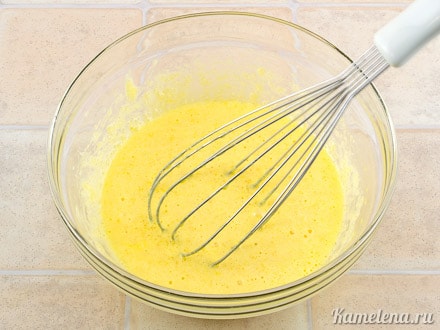
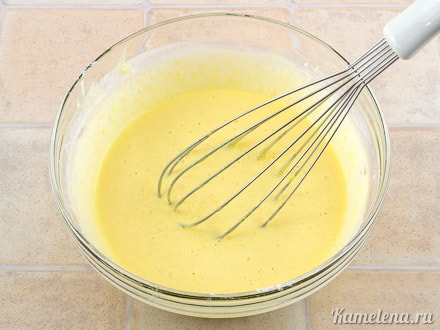
Pour the remaining milk and heavy cream into a heavy-bottomed saucepan and heat until hot. Pour in the egg yolk mixture while stirring constantly with a whisk. Cook the mixture, stirring continuously — especially along the bottom — until thickened.
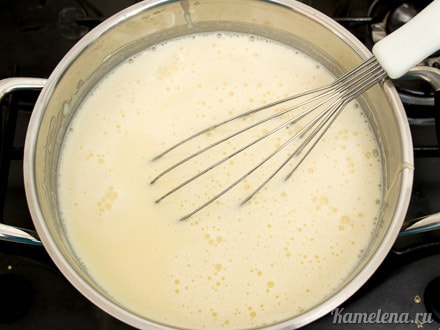
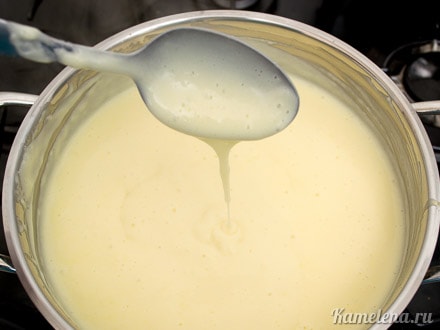
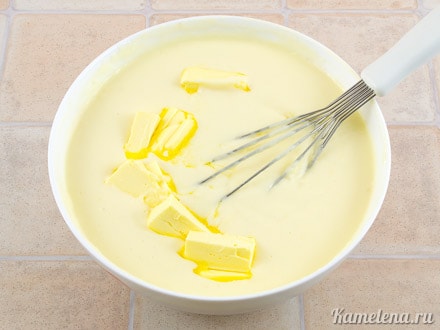
Let the cream cool slightly (about 20–30 minutes), then add the cubed butter and stir well until the butter has melted. As it cools, the cream will thicken considerably. It's best to soak the cake with the cream while it's still warm.
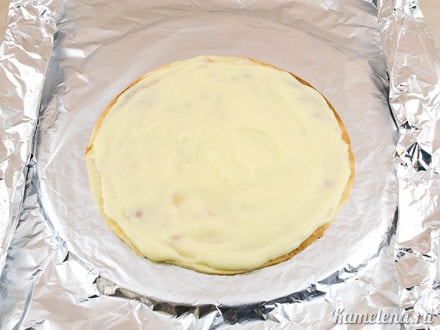
Assemble the cake. Spread a sheet of foil on a cutting board or large plate, leaving extra overhang on the sides so you can wrap the cake later. Place the first layer down and spread it generously with cream (about 140 g).
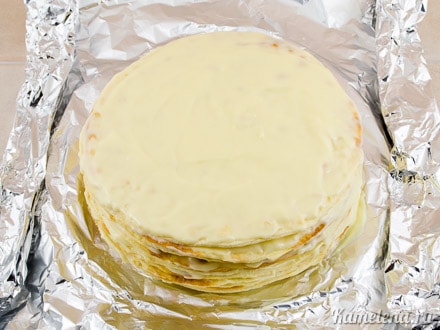
Cover with the second layer, spread with cream, and continue. Use 11 layers total this way (the 12th layer and the trimmings will be used for the coating). Set aside about 2 tbsp of cream for the sides. Before spreading cream on the top layer, press the cake down gently so it compacts slightly — but not too hard, or the cream will squeeze out the sides.
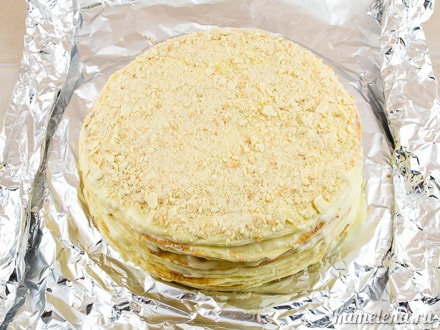
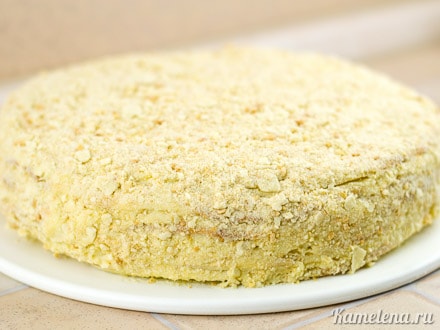
Crumble the remaining trimmings (remove any overly browned pieces) and the 12th layer into fine crumbs. Sprinkle some of the crumbs over the top of the cake.
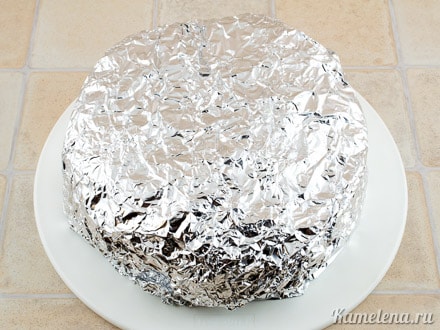
Wrap the cake in foil and refrigerate for 8–24 hours to soak. It's best to let the cake sit for a full day — that way it will be perfectly soaked through and wonderfully tender.
Comments