
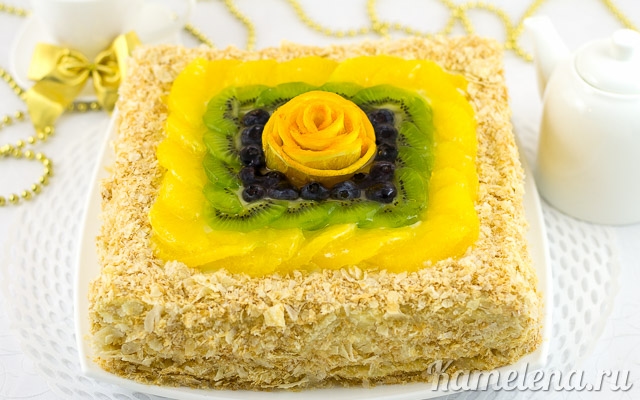
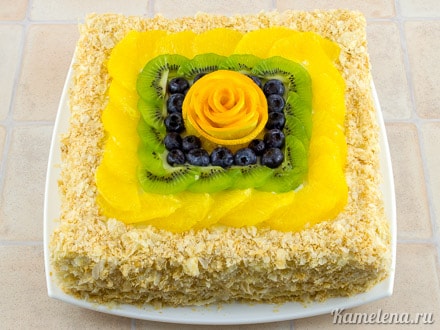
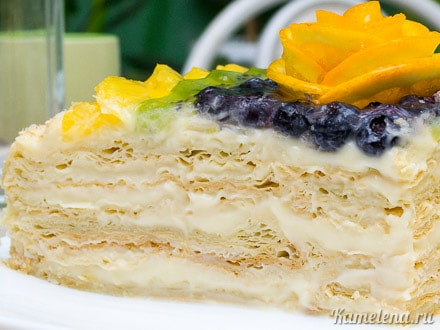
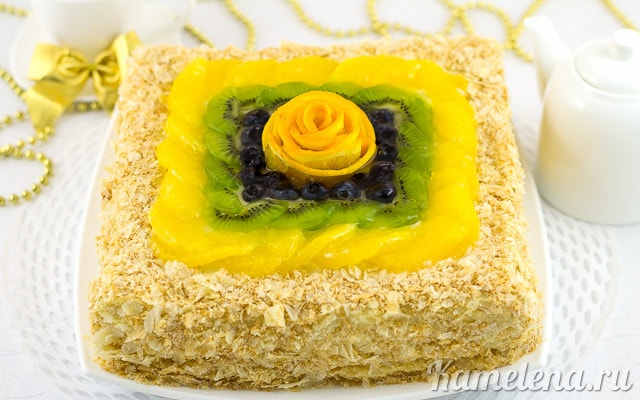
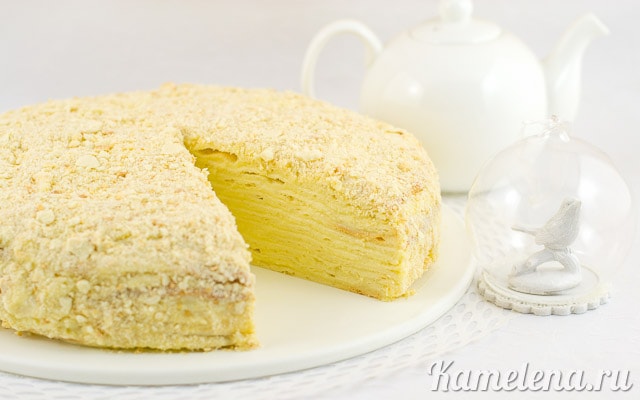
I'm back with a cake, and once again it's a Napoleon :-) Not long ago I made a "wet," juicy Napoleon Cake made with homemade layers — today's cake is more "dry," if you will, but it's still wonderfully soaked through and incredibly tender. Both Napoleon recipes are delicious, they're just quite different, so pick whichever one appeals to you and go for it. Thanks to store-bought puff pastry sheets, this cake comes together really easily. For the cream I once again went with a pastry cream, because in my opinion it's simply the best choice for a Napoleon. That said, you're welcome to use a buttercream made with condensed milk, or whipped cream instead. Technically you don't have to decorate the cake with fruit, but it looks so stunning that it can be the perfect finishing touch that completely wows your guests — at least, that's exactly what happened with mine :-)
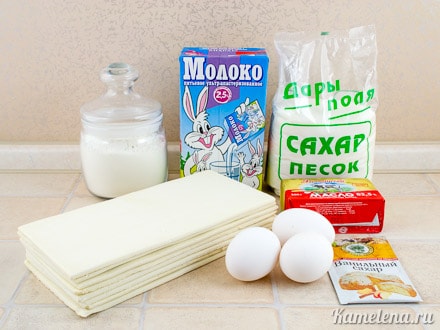
Ingredients:
- 1 kg unleavened puff pastry
- Cream:
- 1 l milk
- 90 g flour
- 300 g sugar
- 3 egg yolks
- 1 packet vanilla sugar (10 g)
- 150 g butter
- Optional:
- juicy ripe fruit
- cake jelly glaze
How to cook napoleon cake with puff pastry
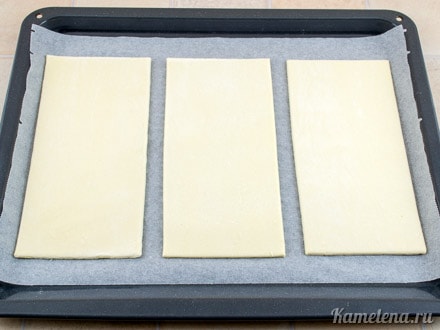
Thaw the unleavened puff pastry for about 30–40 minutes. If you bought pastry rolled into a log, carefully unroll it and cut it into several pieces. If you like, you can roll the dough out a bit in one direction. In my case the pastry came as 8 thin individual sheets, so I didn't roll or cut anything beforehand. I simply placed the sheets on a baking pan and pricked each one with a fork so they wouldn't puff up during baking.
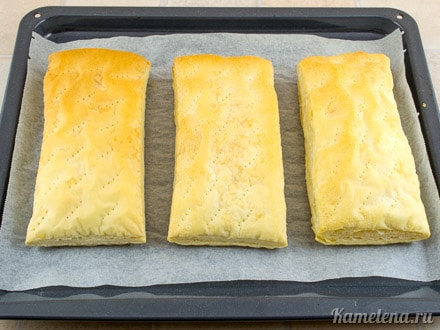
Bake the pastry in an oven preheated to 200°C (400°F) for about 15–25 minutes, or until lightly golden. Let cool completely.
Make the cream. Combine the egg yolks, sugar, and vanilla sugar in a bowl and whisk together thoroughly. Add the flour and about one cup of milk, and stir until completely smooth.
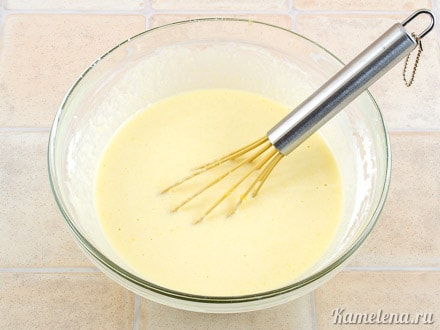
Pour the remaining milk into a heavy-bottomed saucepan and heat until hot. While stirring, pour the egg yolk mixture into the saucepan.
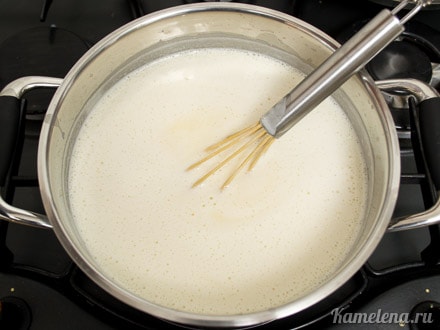
Cook the cream over medium heat, stirring constantly, for about 10–15 minutes, or until it thickens considerably.
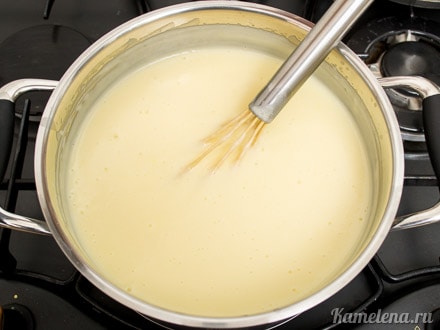
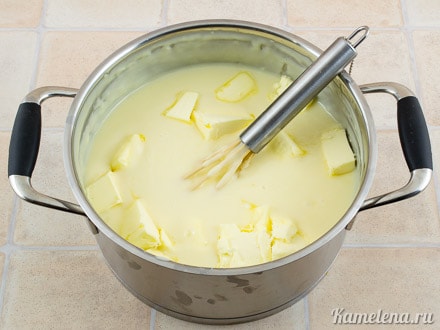
Allow the cream to cool for about 10–20 minutes, then add the pieces of butter and stir well until the butter is completely melted. The cream is ready.
I cut each baked sheet in half so that the layers in the cake would be thinner and the cake would soak through better. If you rolled the dough out before baking, you may not need to do this.
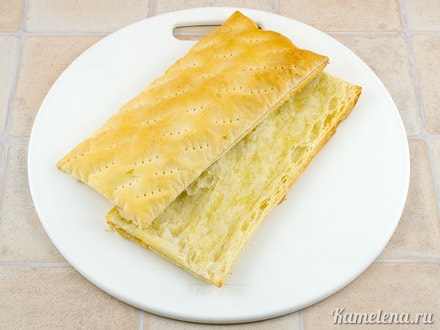
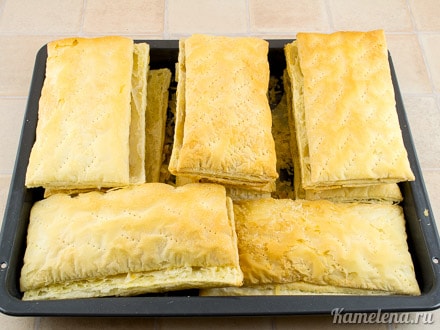
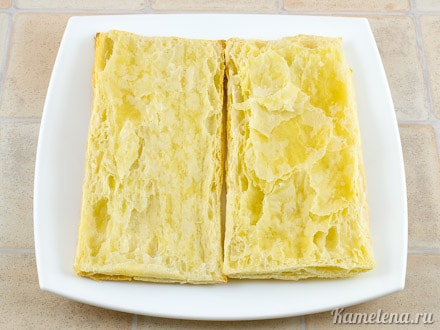
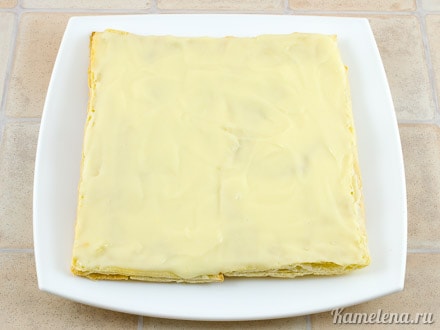
Continue layering all the remaining sheets this way (set one sheet aside for the topping). Before spreading cream on the final layer, gently press the cake down with a cutting board.
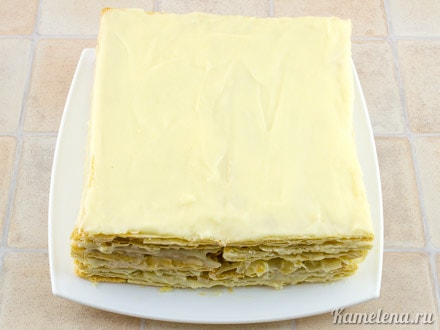
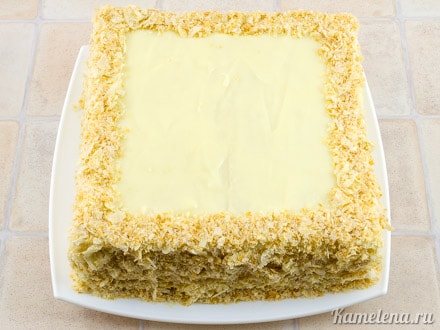
Spread cream on the sides of the cake as well. Crumble the reserved sheet by hand right over the baking sheet. Use the crumbs to coat the sides and top of the cake. If you plan to decorate with fruit like I did, leave the center uncoated. Refrigerate the cake to soak for 8–24 hours.
Comments