
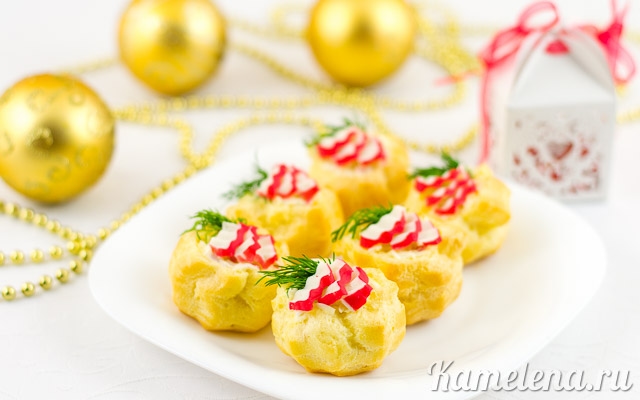
Profiteroles are small pastries made from choux dough — they're sometimes called éclairs as well. I'd like to share a classic choux pastry recipe with you. As the dough bakes, a large hollow forms inside, which you can fill with any filling you like. The first filling I'm suggesting is quite budget-friendly, while the second is a bit more indulgent. Both are absolutely delicious, though I personally prefer the first one. You can add garlic to the fillings as you see fit, but it really does make them tastier. If you're not a big garlic fan, try adding at least a third of a clove for a barely-there hint of flavor. If you're only making one filling, double the quantities. In general, you can stuff these profiteroles with all kinds of fillings — liver or chicken salad, sautéed mushrooms with onions, or even sweet options like fruit salad, pastry cream, and so on. This amount of dough yielded 40 profiteroles for me.
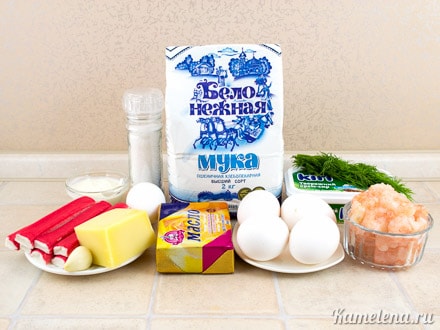
Ingredients:
- For the profiteroles (about 40 pieces):
- 200 ml water
- 150 g flour
- 100 g butter
- 3-4 eggs
- a pinch of salt
- Filling one:
- 150 g cheese
- 150 g imitation crab sticks
- 1-2 hard-boiled eggs
- 1 clove garlic
- mayonnaise (sour cream, or thick yogurt)
- Filling two:
- 150 g cream cheese or farmer's cheese
- 150 g shrimp
- 3-4 sprigs dill
- 1 clove garlic
How to cook savory profiteroles
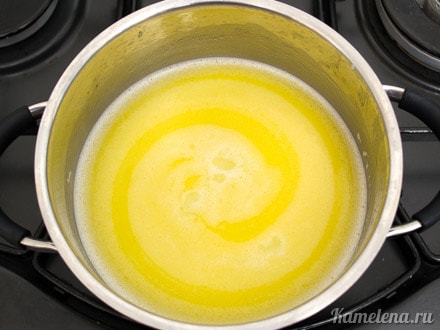
Make the dough. Pour the water into a heavy-bottomed saucepan, add a generous pinch of salt and the butter cut into cubes. Bring to a boil (the butter should be completely melted).
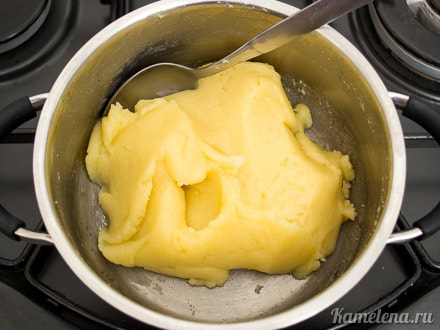
Reduce the heat to the lowest setting, add all the flour at once to the boiling liquid, and start stirring vigorously with a spoon. At first the mixture may look uneven — just keep stirring. It will come together into a smooth, uniform dough that pulls away cleanly from the sides of the pan. Once that happens, continue cooking for about another minute to let the dough cook through properly.
Remove from the heat and let cool until just warm (about 10 minutes). Then beat in the first three eggs one at a time, mixing thoroughly after each one. Lightly beat the fourth egg in a cup and add it gradually. The dough should be smooth and pliable but not too runny. You may need slightly more or fewer eggs than the recipe calls for. I used 3½ eggs (large/extra-large size). Be careful not to add too many eggs — the dough will be easy to pipe and will rise well in the oven, but there's a good chance it will deflate after baking. If you don't add enough eggs, the dough will be hard to squeeze out of the piping bag and may not rise well.
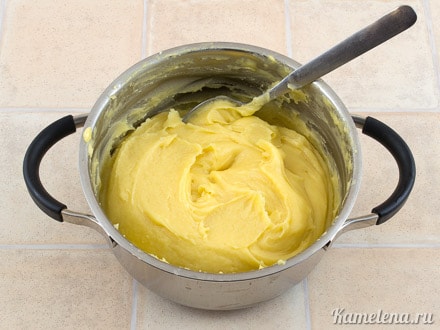
Transfer the dough to a piping bag and pipe small mounds onto a baking sheet lined with parchment paper. You can smooth down any peaks with a wet finger. Keep in mind that the profiteroles will puff up to about 2–3 times their size during baking, so don't make them too big. If you don't have a piping bag, you can squeeze the dough out of a sturdy zip-lock bag with a corner snipped off, or simply drop spoonfuls using two teaspoons.
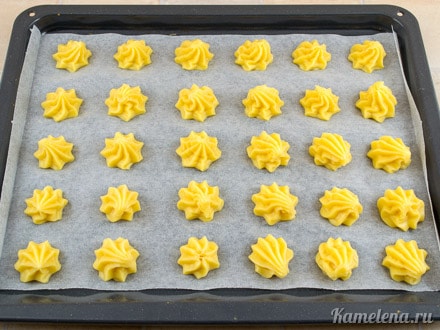
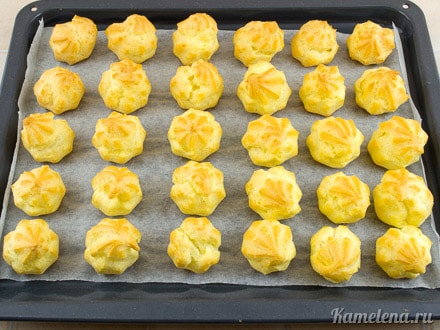
Place in an oven preheated to 200°C (390°F) and bake for about 20–25 minutes, then reduce the temperature to 170°C (340°F) and bake for another 5–10 minutes. Let the finished profiteroles cool completely.
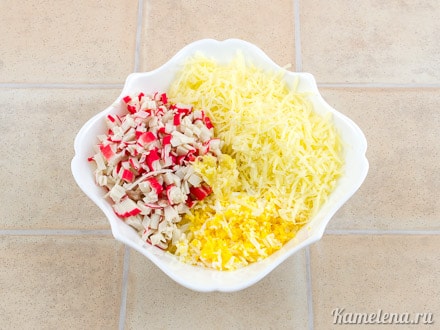
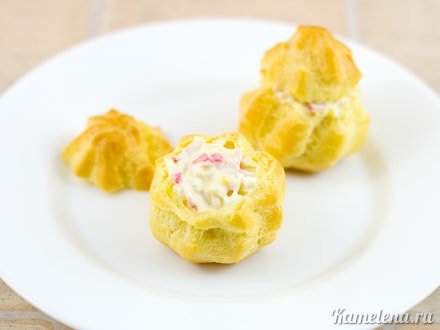
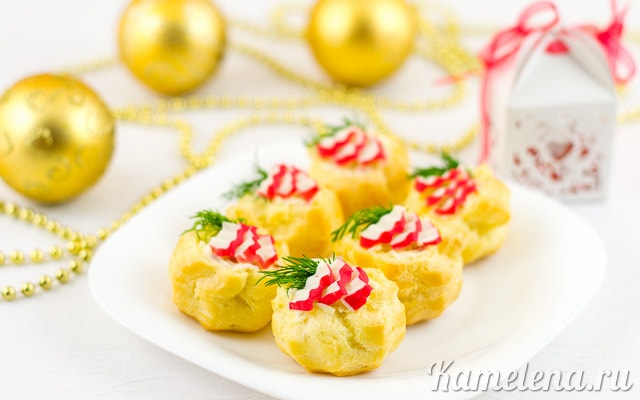
Prepare the first filling. Grate the hard-boiled eggs and cheese on a fine grater; finely chop the imitation crab sticks (if you'd like, set aside 1–2 sticks for garnish). Add the garlic pressed through a garlic press and season lightly with salt. Dress with mayonnaise, sour cream, or thick yogurt to taste.
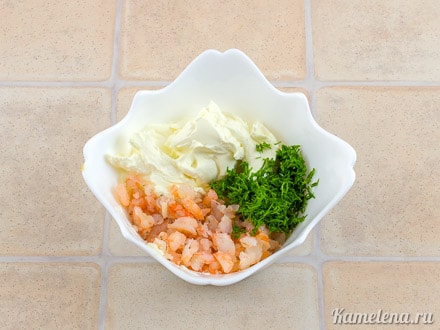
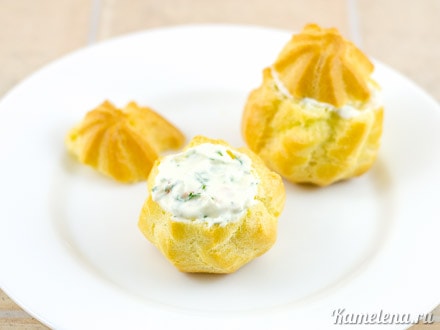
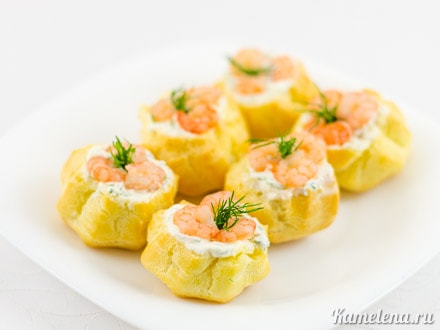
Prepare the second filling. Drop the frozen shrimp directly into boiling water, bring back to a boil, and cook for 1 minute, then drain. Chop the shrimp into small pieces (if you'd like, set aside a third of the whole shrimp for garnish), then add the cream cheese, finely chopped dill, and minced garlic, and mix well. If the mixture is too thick, stir in 1–2 tablespoons of sour cream.
Use a sharp knife to cut a small "lid" off the top of each profiterole. Fill with the filling of your choice. Shown here is the first filling.
This is the second filling. If you'd like, you can place the lids back on top, or garnish the profiteroles however you see fit.
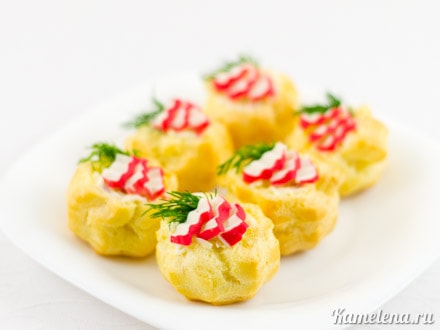
If you're not serving them right away, cover the plate of profiteroles with plastic wrap and refrigerate. If you're storing unfilled profiteroles, place them in a bag and keep at room temperature. These profiteroles make a wonderful light appetizer for any festive table and are sure to delight your family and guests with their beautiful presentation and incredible flavor!
Comments