
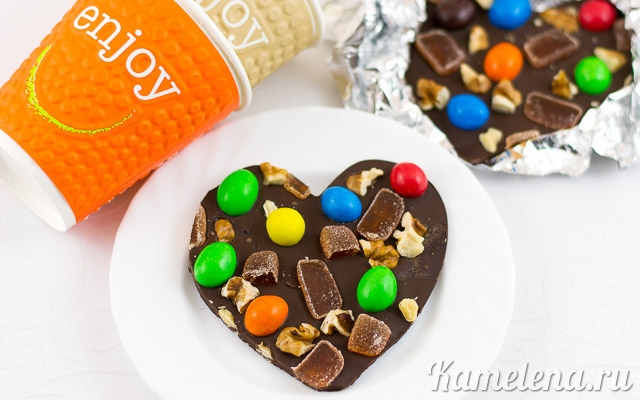
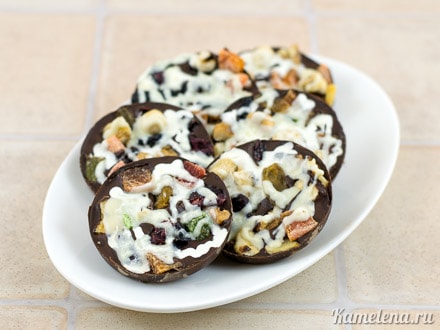
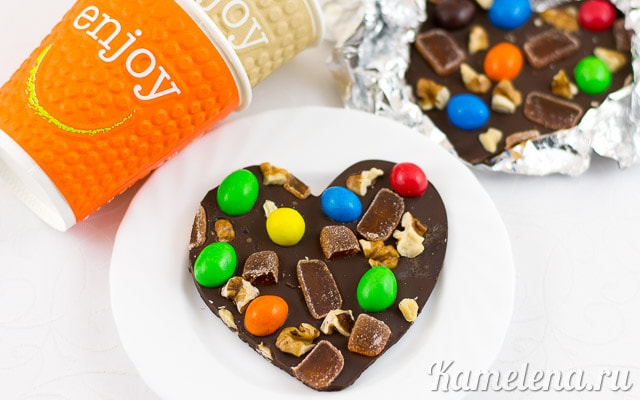
Chocolate is a unique product that almost everyone loves, and it also makes a wonderful gift for family and friends. You can make homemade chocolate with your favorite flavors — for example, hazelnuts, cashews, salted pistachios, raisins, cranberries, orange candied fruit, fruit jellies, and much more. You can add almost anything you can think of that you feel pairs well with chocolate. If you've ever melted chocolate to make chocolate decorations, you may have noticed that once it cools it loses some of its properties — it becomes less shiny, crumbles instead of snapping cleanly, and melts in your hands. To prevent this, the chocolate needs to be tempered first. This is exactly what professional pastry chefs do when they melt chocolate for decorating cakes and other treats. If you have a thermometer, you too can feel like a professional pastry chef :-) Below I'll describe in detail how to temper chocolate at home. That said, if you don't have a thermometer, no worries — you can still make these chocolate gifts, and they'll turn out fun, beautiful, and delicious! From 250 g of chocolate I got 6 small rounds and 3 large hearts.
Ingredients:
- 250 g chocolate
- Your choice of:
- dried fruit, nuts, candied fruit
- candy-coated chocolate drops
- fruit jellies
- etc.
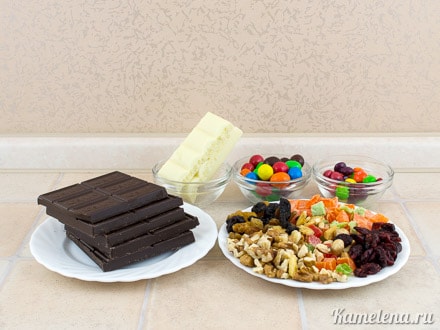
How to cook "chocolate gift"
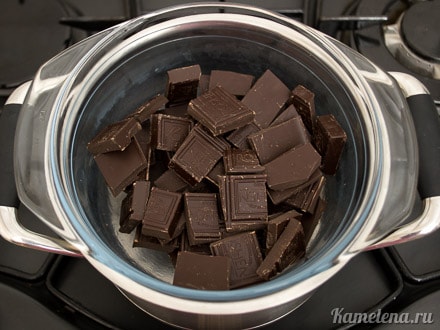
Prepare all your add-ins in advance — chop dried fruit, candied fruit, and fruit jellies into small pieces if needed, and toast the nuts if desired. Now let's temper the chocolate. Each type of chocolate has three specific working temperatures. To temper chocolate, you first need to heat it to the first temperature, then immediately cool it quickly to the second, and then warm it back up to the third working temperature. I used dark chocolate, for which the working temperatures are 45–50°C, 27–28°C, and 32°C. Break the chocolate into pieces, place in a bowl, and set over a double boiler (the bottom of the bowl should not touch the water). Once the water below comes to a boil, turn off the heat.
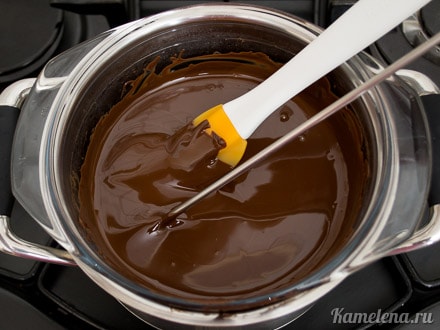
Then immediately move the bowl to a bath of cold water (you can add ice cubes to the water). Stirring constantly, cool the chocolate down to the second temperature. Be careful — at no point should any water get into the chocolate, or it may seize up and turn lumpy.
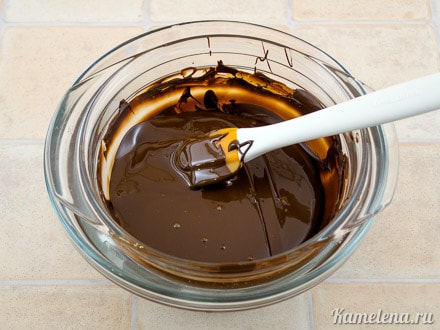
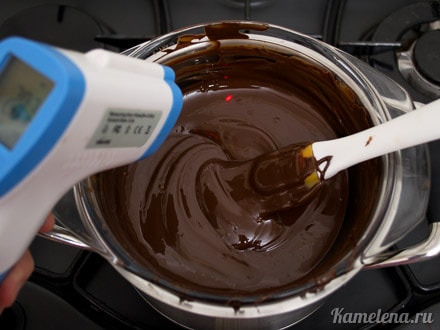
Then return the chocolate to the hot water bath and warm it back up to the third temperature — but no higher. You can use an infrared thermometer, which reads very quickly, or a regular candy thermometer. That's it — the chocolate is ready to work with. If you don't have a thermometer, simply melt the chocolate until smooth as you normally would.
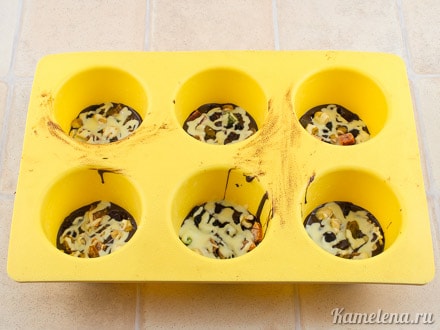
If you have silicone molds with fairly wide, flat bottoms, you can use those here. That's what I did with part of the chocolate — I poured a thin layer into the bottoms of the molds and topped it with a mixture of dried fruit and candied fruit. If you like, you can decorate the tops with white chocolate (I melted a few squares in the microwave).
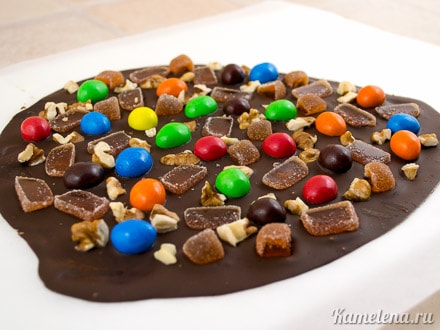
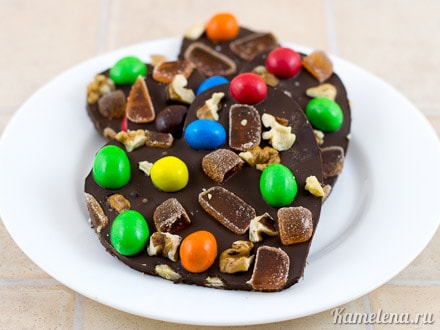
If you don't have any molds, simply pour the chocolate onto a board lined with parchment paper. Tilt the board in all directions so the chocolate spreads into a thin, even layer. Arrange your toppings — in my case, candy-coated chocolate drops, pieces of orange fruit jelly, and walnuts.
Comments