

Today I'm sharing some incredibly delicious cookies! The dough preparation and shaping technique is similar to Gata, except this dough has sugar and more sour cream. The proportions are simple — almost everything is 80 g except the flour, so it's easy to remember! The filling uses a whole orange, which makes these cookies incredibly fragrant and so, so good. After baking, mine didn't even last a day — they were gone in a flash!)) P.S. These cookies are not very sweet, so feel free to increase the amount of sugar if you prefer.
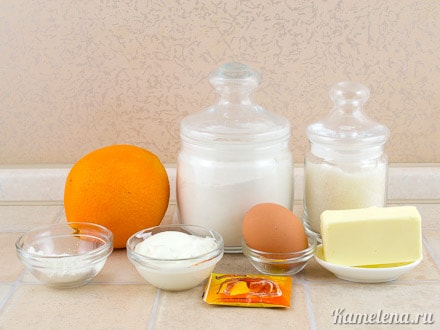
Ingredients:
- Dough:
- 280 g flour
- 80 g sour cream
- 80 g sugar
- 80 g butter
- 1 egg
- 0.5 tsp baking powder
- pinch of salt
- Filling:
- 1 orange (mine was 250 g)
- 30 g sugar
- 1 tbsp starch
- Also:
- egg yolk (for brushing)
- nuts for topping (optional)
How to cook orange cookies
Make the dough. Place the flour, sugar, baking powder, and a large pinch of salt in a food processor. Add cubed butter. The quality of the butter matters a lot for great flavor, so I'll keep saying it — choose a good-quality product, preferably 82% fat content.
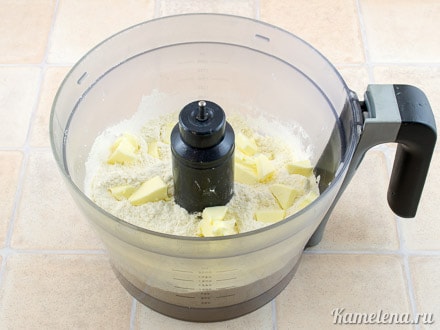
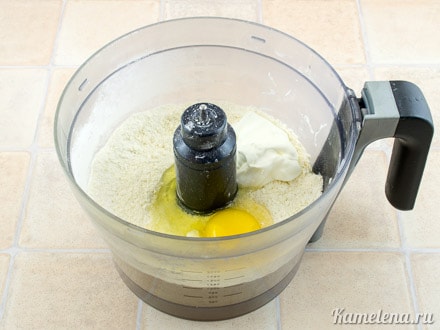
Pulse until crumbly. If you don't have a food processor, you can simply rub the flour and butter together with your fingertips. Add the egg and sour cream (I used 20%). Both should come straight from the refrigerator.
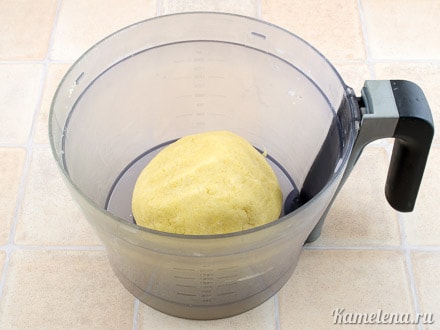
Quickly bring the dough together, then shape it into a ball with your hands. Don't overwork it — just do the bare minimum to form a ball. Refrigerate for 30 minutes.
Make the filling. It's very important to check whether the orange is bitter! Taste a small piece of the peel including the white pith — if it has a bright orange flavor with just a hint of pleasant bitterness, use the first method. If the peel is quite bitter, use the second method. Method 1. Slice the orange and remove any seeds. Blend in a blender (peel and all), then add the sugar and starch and blend again until you get a fairly thick, smooth mixture. Method 2. The same approach I used in the — Shortbread Lemon Tart. Use a vegetable peeler to remove only the colored zest, then cut away the white pith (called the albedo) — that's what causes the bitterness in this case. Blend the remaining peeled orange together with the colored zest, then add the sugar and starch and blend again. P.S. If your mixture turns out too thin — regardless of which method you used (though this is more likely with the second method, since removing the albedo also removes most of the pectin that gives a thick consistency) — transfer it to a heavy-bottomed saucepan and cook over medium heat until thickened, then let it cool completely. I hope I haven't confused you with my lengthy explanation! I used the first method and didn't cook the mixture at all — it was already very thick on its own. But it all depends on the specific orange you use!
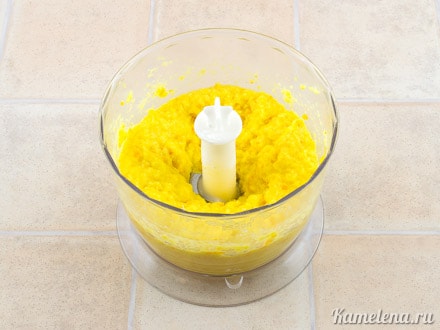
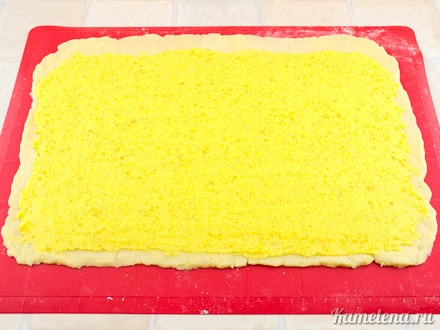
Shape the cookies. Roll the dough out into a large rectangle, about 3–4 mm thick. Spread the filling evenly over the surface, leaving a couple of centimeters uncovered along the far edge.
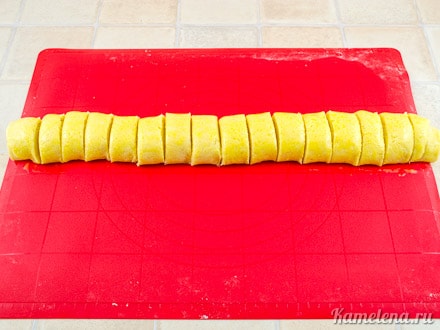
Carefully slide a spatula underneath and transfer to a baking sheet. If desired, sprinkle with nuts — I used chopped almonds.
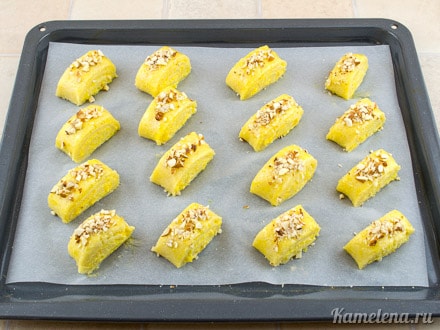
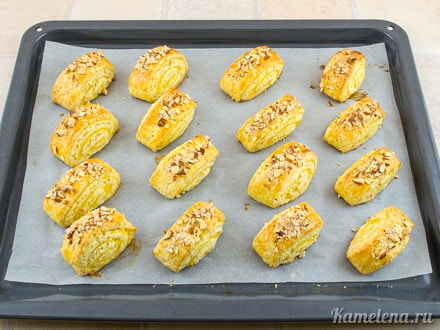
Let cool completely before serving (they taste much better once cooled, in my opinion). A look at the cross-section.
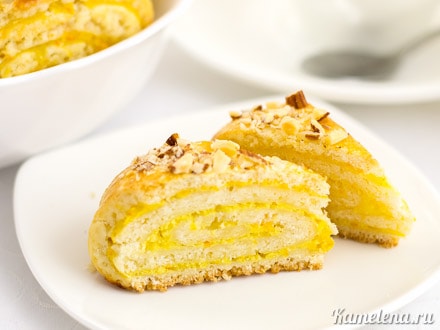
The cookies are very soft on the inside and crispy on the outside — by the next day the exterior loses its crunch, but the inside stays just as tender and soft. Store at room temperature. These orange cookies are a wonderfully flaky treat that wins you over with their delicate texture and beautiful orange flavor and aroma!









Comments