

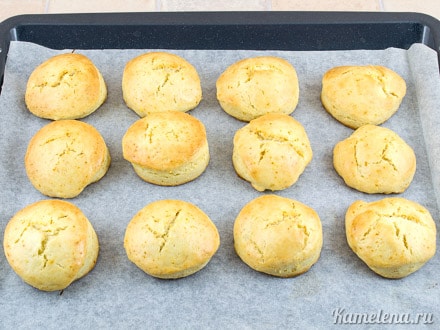
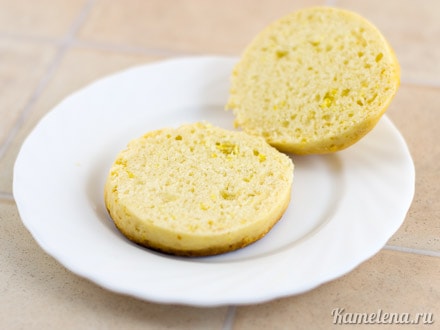
Scones are a traditional English baked good — something like a quick, yeast-free bread. Originally, scones were made with barley flour and only a small amount of sugar and butter. These days, quite a bit more of both are used, which isn't surprising since it makes them taste better :-) Most recipes call for milk, but I used heavy cream, which gives the scones a lovely, creamy flavor. If you'd like, you can substitute the cream with yogurt, or a mix of sour cream and milk. I also added honey, which helps the finished scones stay soft longer and keeps them from going stale. For fragrance, I added my favorite lemon zest — you could use vanilla sugar or cinnamon instead. Just keep in mind that with those spices, you'll want to serve the scones with sweet toppings only, whereas lemon zest pairs well with both sweet and savory accompaniments. In terms of flavor, scones are somewhere between a buttery roll, bread, and a muffin. They come out very soft and tender with a slightly crumbly texture, especially fresh out of the oven. In short, they're absolutely delicious! This recipe made 12 scones, 6 cm in diameter.
Ingredients:
- 300 g flour + 1-2 tbsp.
- 200 g heavy cream 10-20%
- 70 g butter
- 70 g sugar
- 50 g honey
- 1 tsp baking powder
- 1/2 tsp salt
- zest of 1 lemon
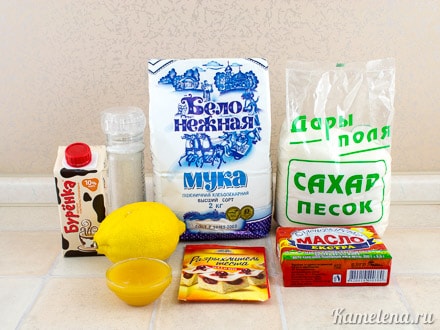
How to cook scones

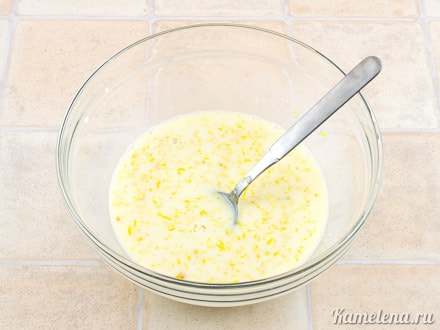
Pour cold heavy cream into a bowl (set aside 2 tbsp for brushing the tops), then add the sugar, salt, lemon zest, and honey (if the honey is thick, melt it briefly in the microwave first). Stir well until everything is evenly combined.
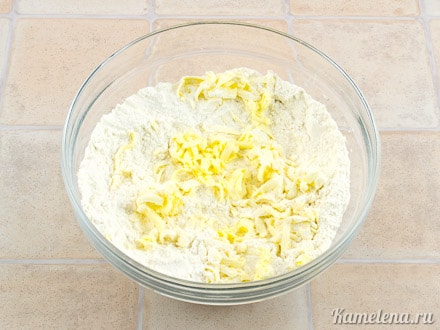
In a separate bowl, mix the flour with the baking powder. Grate the cold butter on a coarse grater directly into the flour, or cut it into small cubes (use butter straight from the refrigerator).
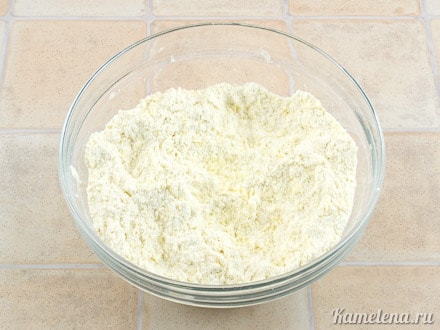
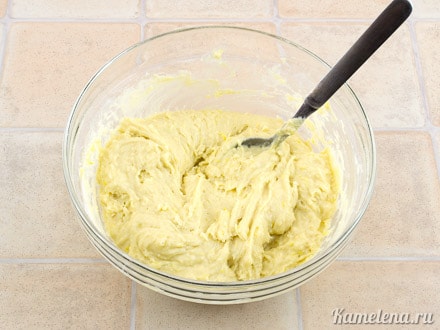
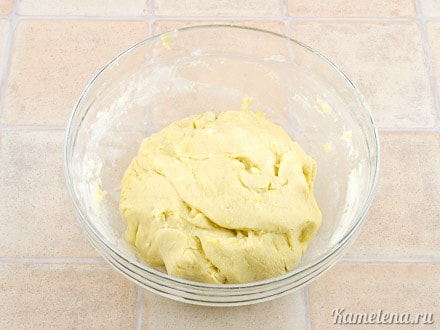
Then bring the dough together with your hands into one large, soft ball — don't overwork it. If the dough is too sticky, add a little more flour. The dough should be very soft, pliable, and not dense. Refrigerate for 20–30 minutes.
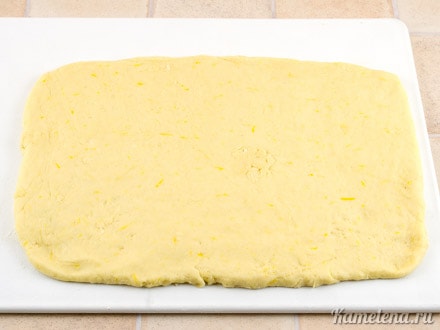
Roll the dough out into a thick rectangular slab, about 1 cm thick (dust the rolling pin with flour if needed). Use your hands to straighten the edges into an even rectangle.
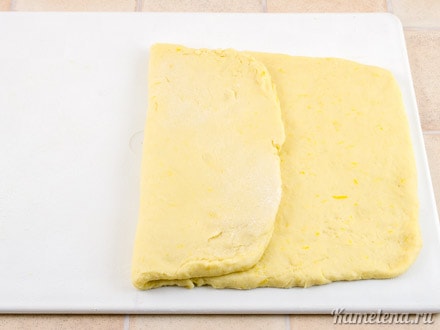
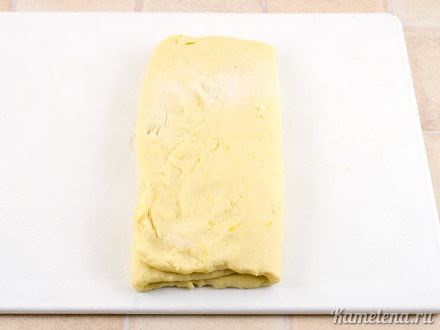
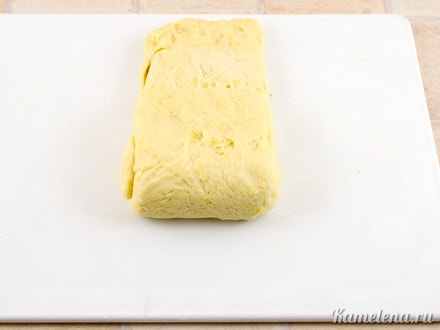
Then fold the other end back over, overlapping. You'll end up with a thick, folded square. This step gives the finished scones a more tender, flaky texture.
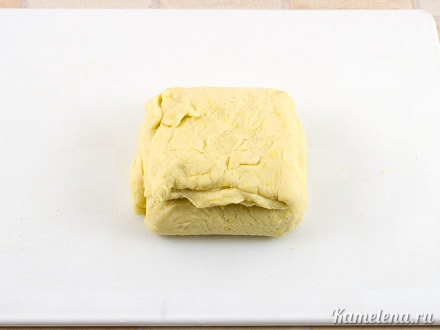
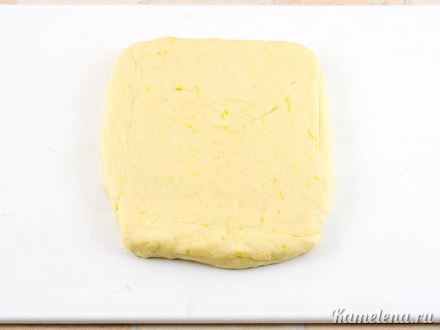
Cut out six rounds using a sharp-edged cutter. I use a narrow tin can with the lid removed (6 cm in diameter) as my cutter.
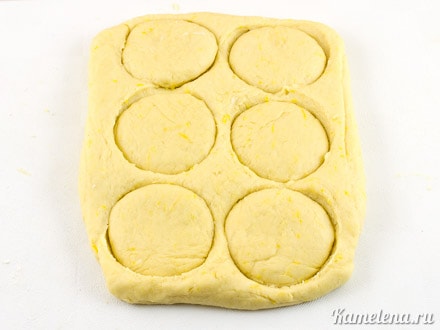
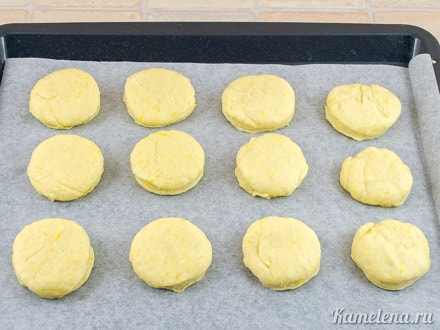
Carefully remove all the scraps of dough from around the rounds. Use a spatula to transfer the rounds to a baking sheet lined with parchment paper. Gather the scraps, re-roll, and cut out more rounds.
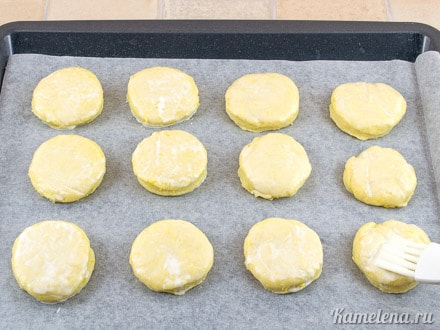
Brush the tops of the scones with the reserved heavy cream, being careful not to let it drip down the sides.










Comments