

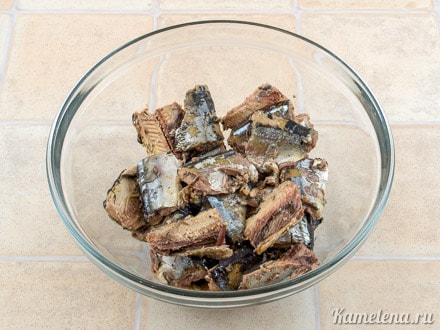
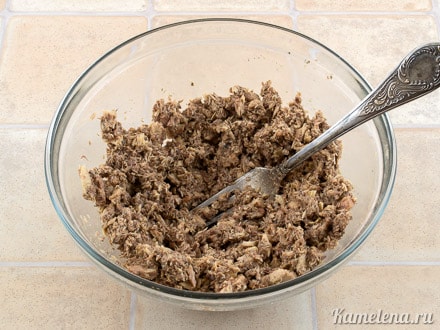
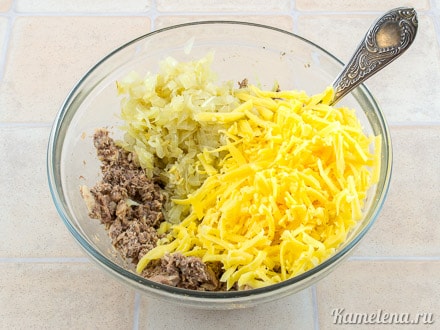
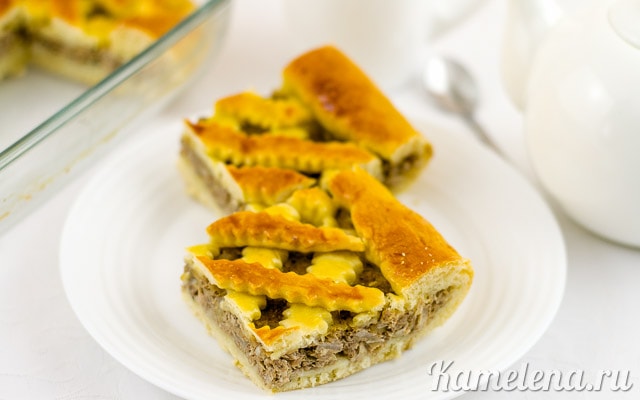
Not long ago I was getting ready to visit a friend for their birthday, and the birthday person requested a yeast pie with fish from me — and even though I'm not the biggest fan of yeast baking, I had to deliver :) I had saury on hand, but almost any canned fish works here, and the flavor of the pie depends largely on the fish itself. Go with what you and your family enjoy — it's wonderful with pricier options like canned salmon, pink salmon, or tuna, and just as delicious with saury, mackerel, or sardines. The main thing is that the fish should be packed in its own juice (not in oil and not in tomato sauce). For the filling, in addition to the fish, I added a generous amount of onion — it gives the filling the moisture it needs. The cheese and sour cream (or mayonnaise) add a nice richness, and they also keep the filling juicy and tender even with drier fish like pink salmon or tuna. The pie turned out delicious — the guests devoured it incredibly fast, and literally within an hour there was only one small piece left :) I hope you enjoy it too, especially if you love yeast dough.
Ingredients:
- Dough:
- 350–400 g flour
- 150 ml milk
- 100 ml kefir
- 5 tbsp vegetable oil
- 1 tbsp sugar (level)
- 2 tsp active dry yeast (heaping)
- 1/2 tsp salt
- egg yolk (for brushing)
- Filling:
- 2 cans canned fish in its own juice (250 g each)
- 250 g onion
- 100 g cheese
- 100 g sour cream (or mayonnaise)
- vegetable oil for frying
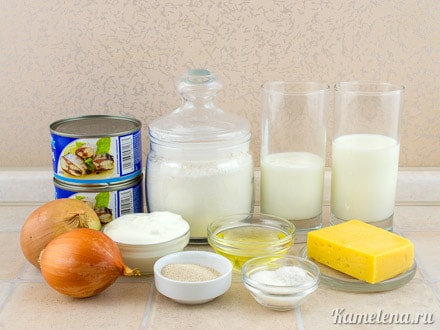
How to cook yeast pie with canned fish
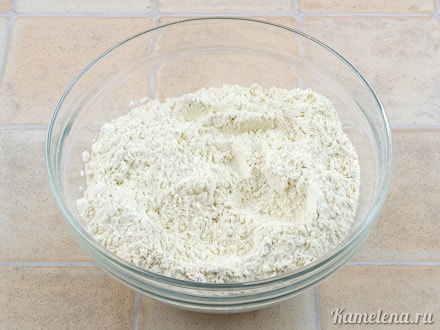
Make the dough. Place 350 g of flour in a bowl and mix in the yeast (I used instant yeast, which is added directly to the flour).
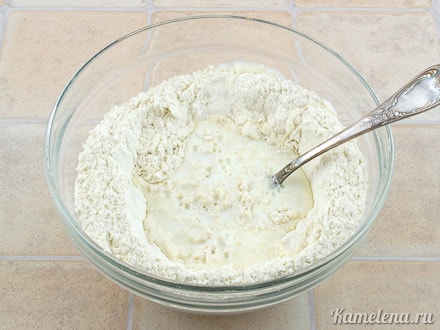
Warm the kefir, milk, sugar, and salt in a small saucepan until just warm to the touch (barely warm on your finger). Pour into the flour and stir vigorously with a spoon until the dough starts to come together.
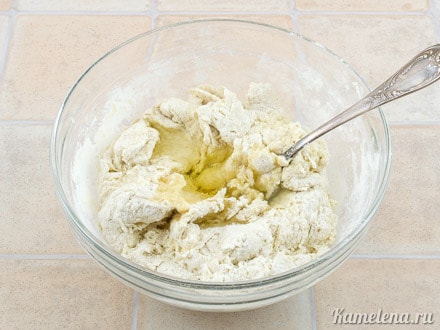
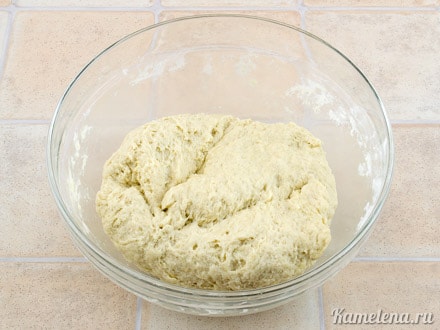
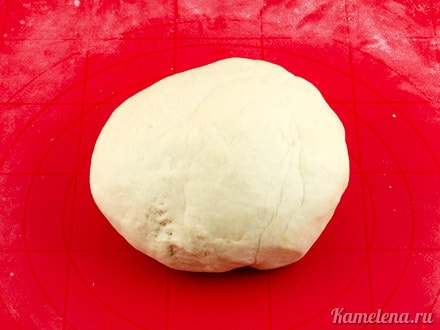
Flour the work surface, turn the dough out, and knead actively for at least 5–10 minutes, adding the remaining flour as needed. You may need a little more or less flour depending on its absorption capacity. I used 370 g total. The dough should be very smooth, soft, and non-sticky, but not stiff.
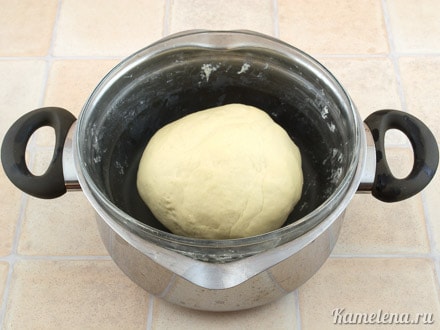
Return the dough to the bowl and place in a warm spot to rise (I set mine in a pot of warm water and cover it with the pot's lid). Alternatively, place it in a slightly warm oven (turn it on for just a couple of minutes to warm up, then turn it off).
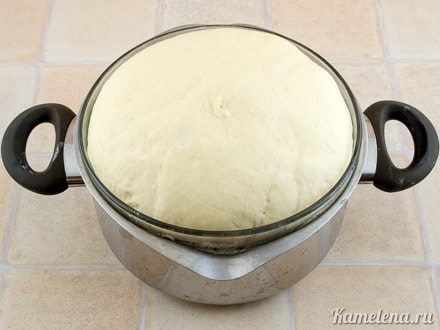
Let the dough rest for 1–2 hours, or until it has roughly tripled in size, approximately as shown in the photo.
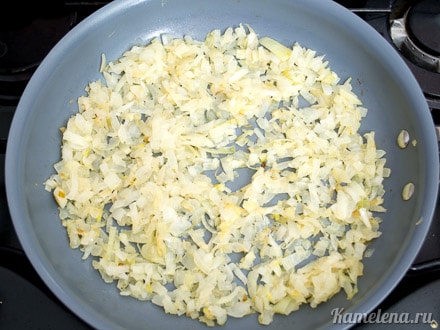
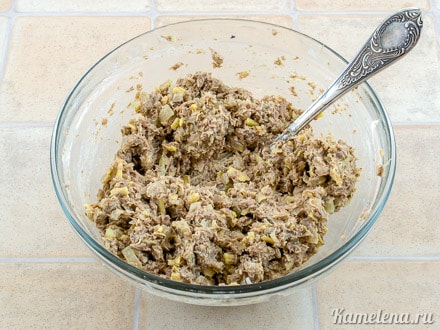
While the dough is rising, make the filling. Peel the onion and dice it as finely as possible. Add to a skillet with heated oil and cook until soft and translucent, but not golden.
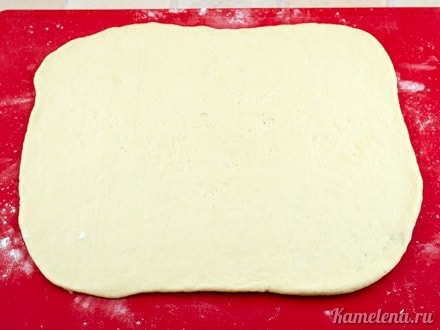
Divide the risen dough into two portions: 3/4 and 1/4. Roll out the larger portion on a floured surface.
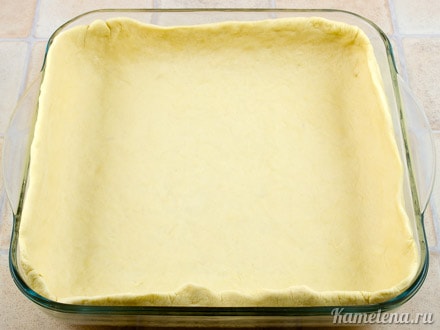
Prepare a fairly large baking pan — I used a 25 x 25 cm pan — and grease it with oil. Transfer the dough to the pan, letting it come up the sides.
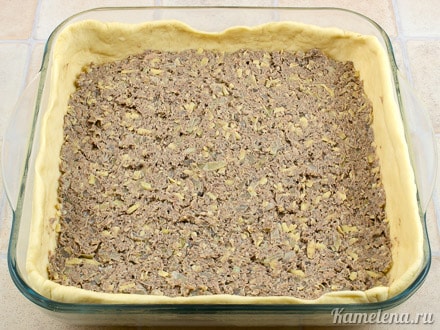
Roll out the remaining dough and cut it into thin strips (I used a fluted pastry wheel) and lay the strips diagonally over the filling. If you prefer, skip the strips and simply lay a full sheet of dough on top, then poke it all over with a fork.
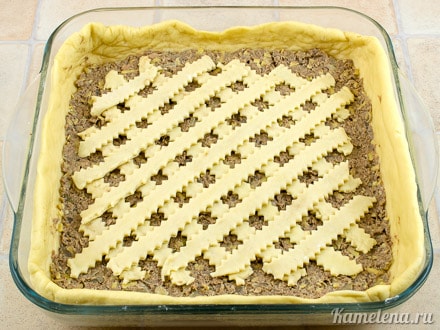
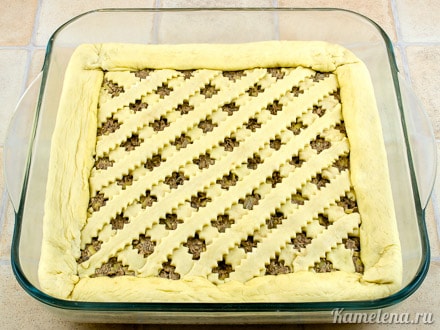
Fold the side edges up over the pie, pressing them lightly to seal where they meet the top layer. Let the pie rest for 20–30 minutes for a second rise.
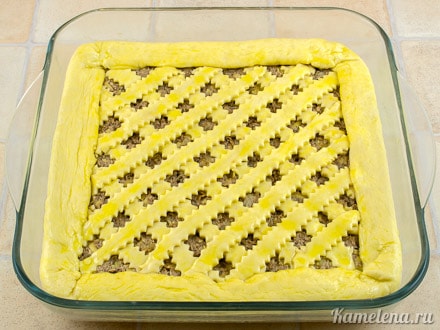
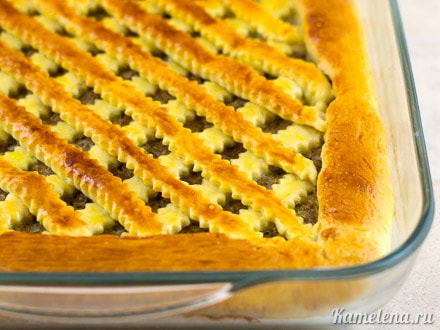
Mix the egg yolk with a teaspoon of water, then brush the top of the pie with the mixture using a pastry brush.





Comments