
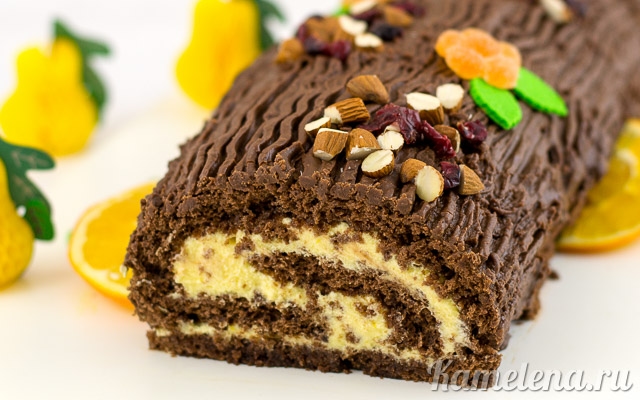
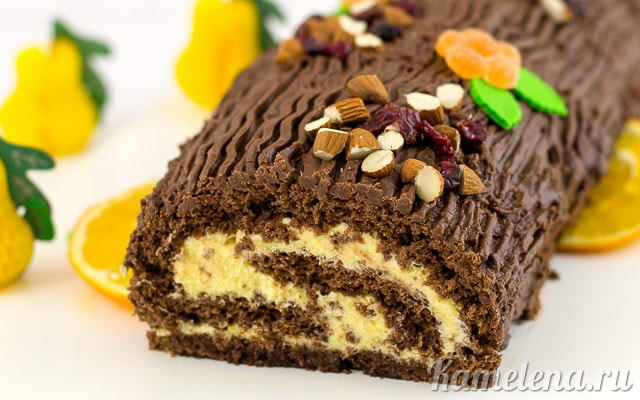
The tradition of baking a "Bûche de Noël" (Yule Log) is very popular in France and several other European countries. The idea is to decorate a roll cake to look like an actual log. In principle, you can use any sponge cake and cream you like as the base. Since Christmas makes me think of citrus fruits — oranges and tangerines — and I'm a huge fan of citrus baking in general, I filled this roll with an orange cream similar to the one in the Sunny Orange Cake. The difference is that in that recipe the cream sets right in the oven, whereas here it's thickened in advance on the stovetop in a saucepan. The butter is whipped separately and folded in to make the cream fluffier. For decorating the top I specifically chose dark milk chocolate — I think it gives the bark a more natural color :-) That said, you could also use bittersweet chocolate or a thick cocoa-based glaze. I intentionally avoided expensive or hard-to-find ingredients — mascarpone, cream cheeses like Philadelphia, heavy whipping cream, and the like. I really wanted this recipe to be accessible to everyone, so that any reader of this site, regardless of budget or what's available locally, could treat their loved ones to this delicious roll cake!
Ingredients:
- Cake Layer:
- 4 eggs
- 120 g sugar
- 100 g flour
- 20 g cocoa
- 1 packet vanilla sugar (10 g)
- 1/3 tsp baking powder
- Soaking Syrup:
- 50 g sugar + 50 g water
- Cream:
- 250 ml citrus juice + zest (≈2 oranges, 1 lemon)
- 180 g sugar
- 150 g butter
- 2 eggs
- 30 g starch (I used potato starch)
- Ganache:
- 150 g chocolate (I used dark milk chocolate)
- 50 g butter
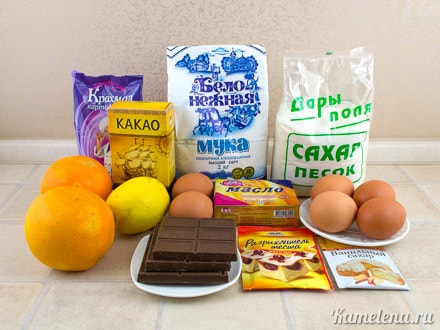
How to cook "bûche de noël" christmas yule log
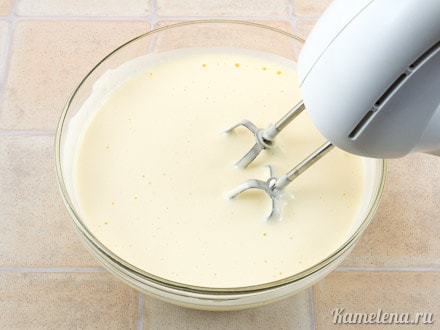
Make the sponge cake. Beat the eggs thoroughly, gradually adding the sugar and vanilla sugar. Beat for about 7–15 minutes or longer, depending on your mixer. The mixture should increase significantly in volume and turn pale. For a sponge cake that will be rolled up, it's best to beat the whole eggs together — this makes it sturdier and easier to roll (especially if you let it rest for a while). In principle you don't need to add baking powder, especially if you've beaten the eggs really well, but I added just a tiny bit.
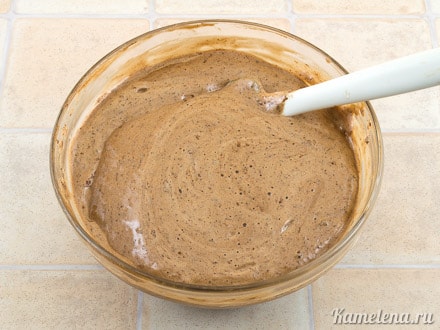
Sift the flour, cocoa, and baking powder together. Add the dry mixture to the eggs in portions, gently folding it in from the bottom up each time.
Pour the batter onto a baking sheet lined with parchment paper and spread it evenly with a spatula. My baking sheet's interior dimensions (where the batter goes) are 38x30 cm. Bake in an oven preheated to 200°C (400°F) for approximately 15–30 minutes.
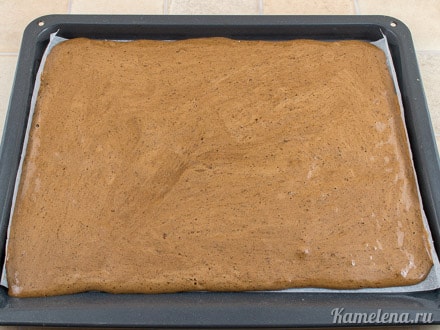
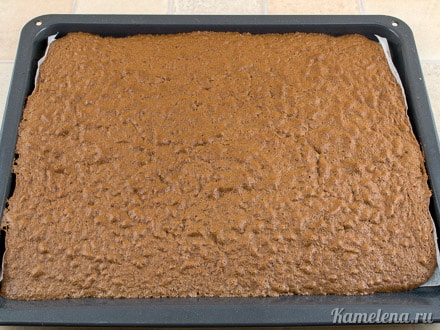
Let the finished sponge cake cool completely, then leave it to rest for several hours or overnight. It will become more pliable and roll up more easily.
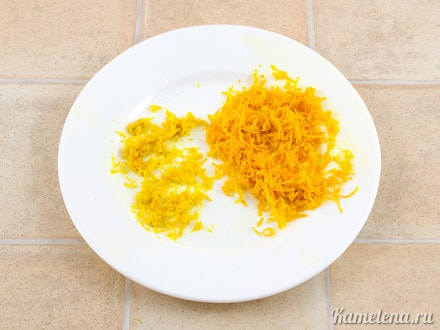
Make the cream. Zest one orange and the lemon using a fine grater, being careful not to grate into the white pith.
Juice the two oranges and the lemon — you need 250 ml of juice. You may need an extra orange to get the right amount, especially if you're squeezing by hand.

Combine the zest, juice, and eggs in a bowl and mix well. Let it sit for 5–10 minutes so the zest can infuse its aroma into the juice.

Strain the mixture through a fine-mesh sieve into a heavy-bottomed saucepan. Press the zest firmly with a spoon to extract all the aromatic oils into the juice.

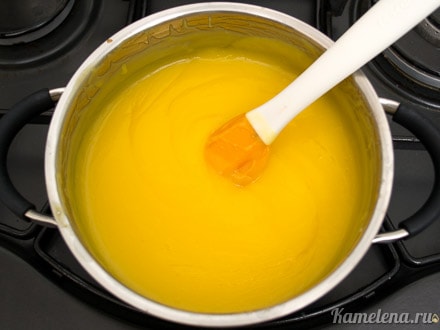
Add the sugar and starch and whisk well until the starch is fully dissolved. Place over heat and bring almost to a boil, then cook over low heat, stirring, until the cream thickens considerably — it comes out quite thick. Be careful not to let the eggs curdle; the mixture should not boil vigorously. Let the finished cream cool completely.
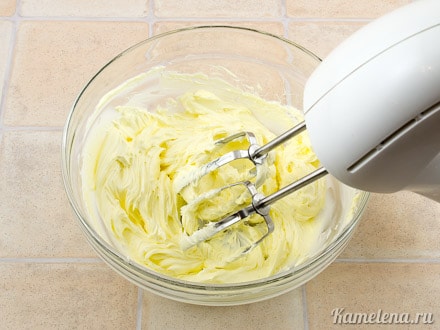
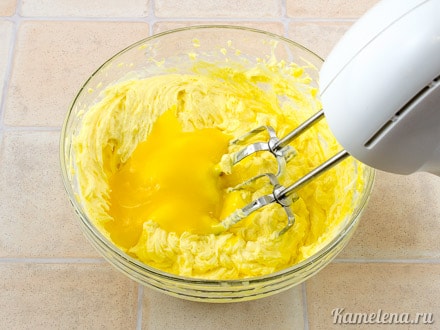
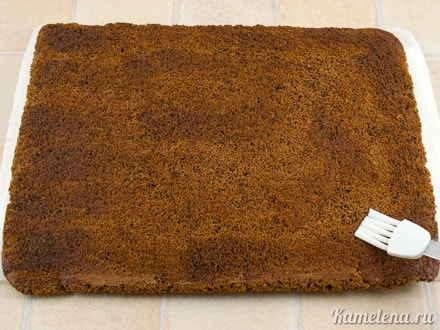
Prepare the soaking syrup — dissolve the sugar in hot water, stir well, and let it cool completely. Assemble the log. Peel the parchment paper off the sponge cake and place it porous side up on a fresh sheet of parchment. Brush the cake layer thoroughly with the soaking syrup — a pastry brush works best.
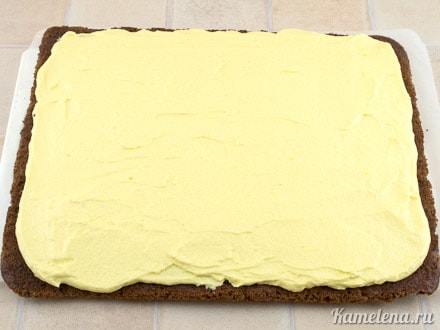
Spread the cream over the sponge, making the layer a little thinner along the edges and at the far end (the end you'll finish rolling to).
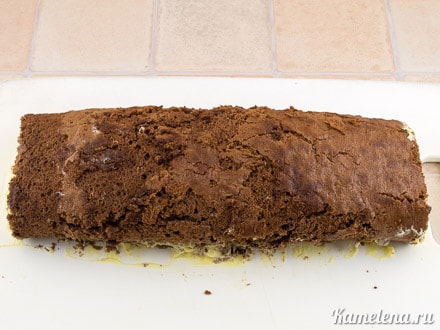
Position the sheet with a short side facing you and carefully roll it up into a log. If it cracks a little here and there, don't worry — everything will be covered with chocolate anyway. You can refrigerate the cake for 1–2 hours so it holds its shape better (or pop it in the freezer for half an hour).
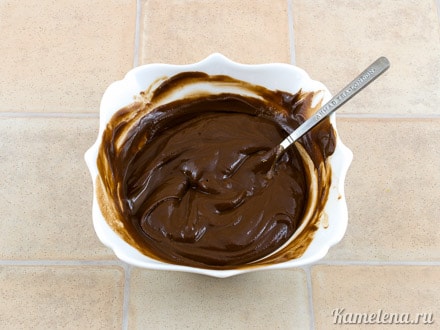
Break the chocolate into pieces, add the butter cut into cubes, and melt together into a smooth mixture using a double boiler or the microwave.
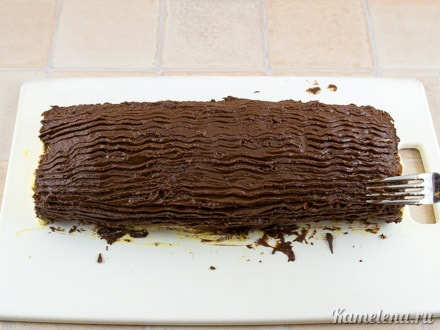
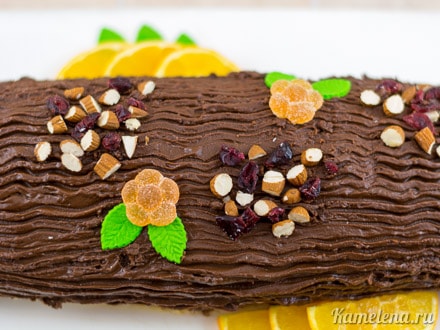
Coat the roll with the ganache using a spatula. Then create a bark pattern by dragging a fork over the surface with light, wavy strokes (hold the fork nearly parallel to the surface and don't press too hard).
Comments