

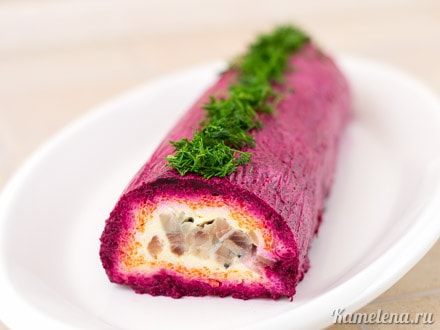
With the holidays just around the corner, I'm here today with a fantastic idea for how to present a familiar, beloved dish in a completely new way. Today we're making the classic "fur coat" as a roll — it's absolutely delicious and festive. The idea isn't brand new, but it's incredibly impressive and beautiful. For this roll, I used all the same components as for a classic herring under a fur coat, just in slightly different proportions, plus a little gelatin to help the roll hold its shape. The result is wonderfully delicious — an incredibly tender appetizer roll with a familiar yet transformed flavor. Even though it's essentially the same dish, the taste is noticeably more delicate and refined than the classic version. I absolutely loved it, and some of my taste-testers even said the roll is better than the classic!
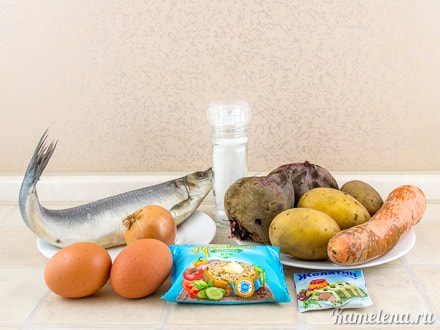
Ingredients:
- 1 herring
- 450 g beets
- 350 g potatoes
- 200 g carrots
- 50 g onion
- 2 eggs
- 150 g mayonnaise
- 5 g gelatin
- salt
How to cook herring under a fur coat roll
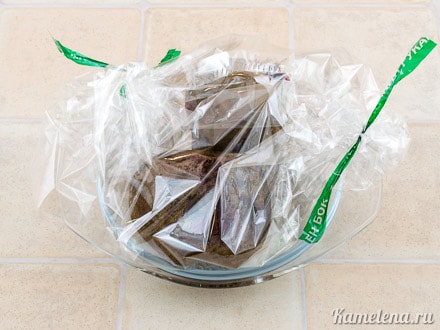
Cook the beets using any method you prefer. This time I cooked mine in the microwave — just place them in a roasting bag or a regular plastic bag and cook on full power for 5–10 minutes. You can also boil the beets on the stovetop or roast them in the oven. Boil the potatoes and carrots until tender. Hard-boil the eggs as well, then let them cool.
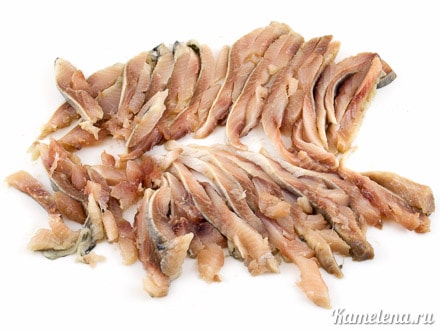
Clean the herring, removing all the bones and skin. For detailed instructions on how to do this, see the classic recipe — Herring Under a Fur Coat. Then cut the herring into thin, narrow strips. Alternatively, you can use store-bought jarred herring fillets — ideally without added spices or flavorings. Personally, I prefer the dish with plain herring.
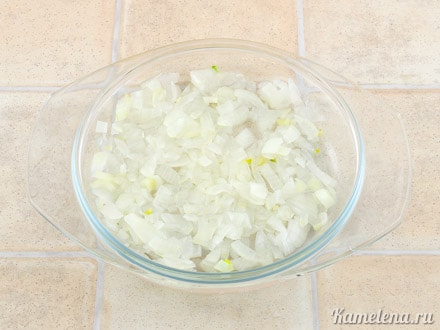
Peel the onion and dice it finely, then pour boiling water over it (this is optional, but it takes the sharpness off). If you'd like, you can also marinate the onion by adding 1–2 tsp of wine or apple cider vinegar (I did both — blanched it and marinated it).
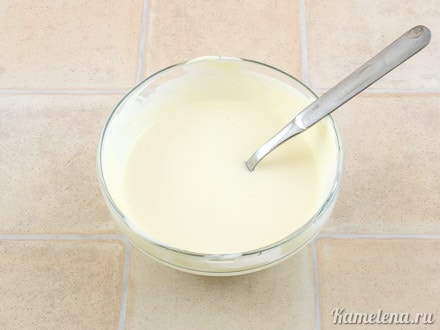
Soak the gelatin in 50 ml of water ahead of time and let it sit for the amount of time indicated on the package. Then heat it until hot so the gelatin fully dissolves (I do this in the microwave), and let it cool. Stir the prepared gelatin into the mayonnaise, mixing as you pour it in.
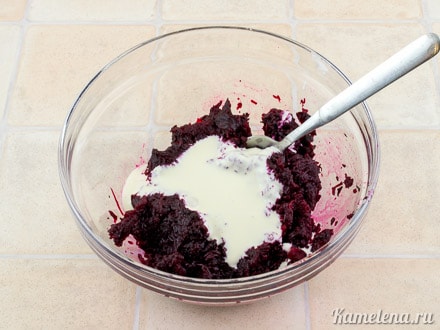
Now let's assemble the roll. Grate the beets on the fine side of the grater to get very fine shreds (but not a purée!). If the beets release a lot of juice while grating, drain it off. Add 2–3 tbsp of mayonnaise (about one-quarter of the total amount), season with salt to taste, and mix well.
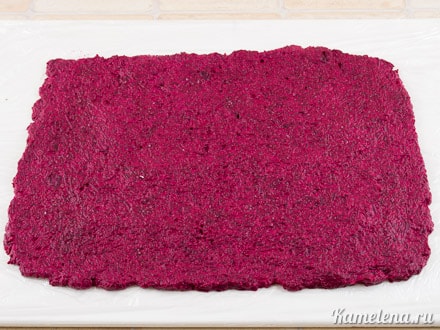
Line a cutting board with two layers of plastic wrap, securing the sides with kitchen clips for convenience. Spread the beets out into a thin, even rectangle.
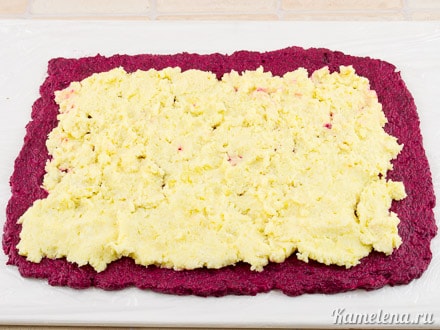
Grate the potatoes on the fine grater as well, mix in mayonnaise, season with salt, and spread the layer over the beets. This potato layer can be a bit tricky to spread — I found it easiest to flatten small portions in my hands into flat patties and lay them on top.
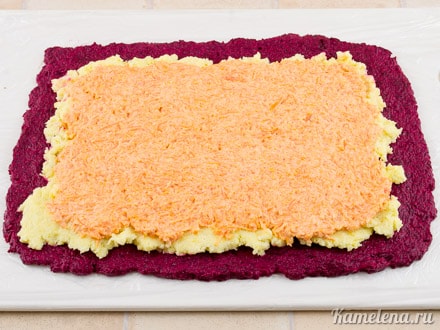
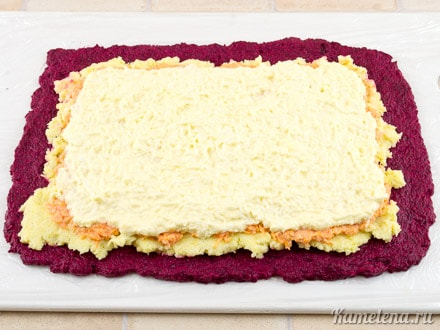
Next, a bit closer to your side of the board, spread half of the onion, then lay all the herring on top (there may seem like a lot of herring, but don't hesitate — use it all, pressing it down gently so it doesn't fall apart), then top with the remaining onion. To summarize the layers: the beet layer should be the largest, and all the other layers smaller. As I mixed each layer with mayonnaise, I seasoned each one with salt. Even with the saltiness of the herring, I always season every layer — otherwise the vegetables taste bland and even blander next to the herring. But that's a matter of personal taste.
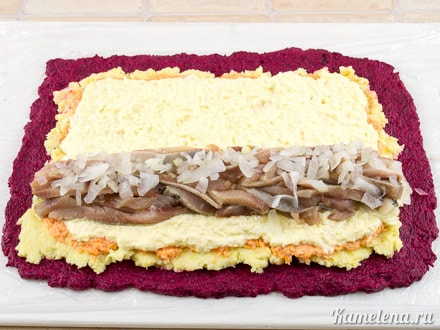
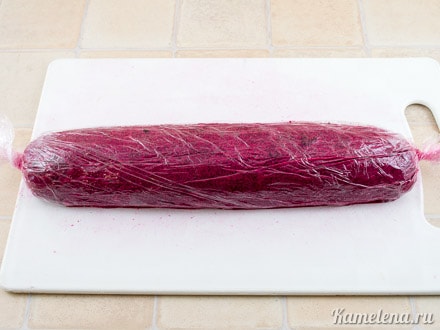
Using the plastic wrap to help you, fold the near edge up and over the herring, then roll the far edge toward you to form a roll. With your hands, shape the roll through the plastic wrap, and if needed, gently roll it back and forth so the beet layer evenly covers all sides. Refrigerate until fully set — a few hours or overnight.






Comments