
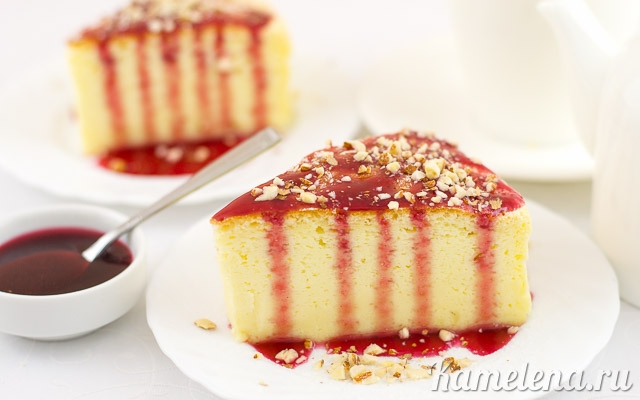
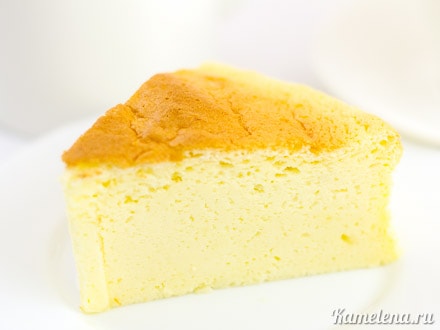
This is a very unusual cheesecake — thanks to its unique texture, it's often called a "cotton" cheesecake. It's called a cheesecake because it contains cream cheese, but the texture is completely different from a classic New York Cheesecake. Japanese cheesecake had been calling to me for a long time with its originality, and I finally made it happen. It's prepared similarly to a sponge cake — with separately whipped egg whites and yolks that are gently folded together — except here you also add cream cheese that has been mixed with milk beforehand. Now, let me talk about the flavor and texture, because they turned out incredibly unique! As I was tasting a slice of the finished cheesecake, a whole flood of associations came to mind — it's a cheesecake, a baked curd casserole, a "moist" sponge cake, a cheese soufflé, and even pancakes all at once)) In my opinion, Japanese cheesecake resembles all of these things, yet isn't quite like any of them specifically. So the taste is truly one of a kind! The texture is like a porous sponge — though why it's called "cotton" cheesecake I'm not sure, because it doesn't really remind me of fluffy cotton, but it does sound lovely))
Ingredients:
- 6 eggs
- 250 g cream cheese
- 150 ml milk
- 130 g sugar
- 60 g butter
- 60 g flour
- 20 g starch
- 10 g vanilla sugar
- 1 tbsp lemon juice
- a pinch of salt
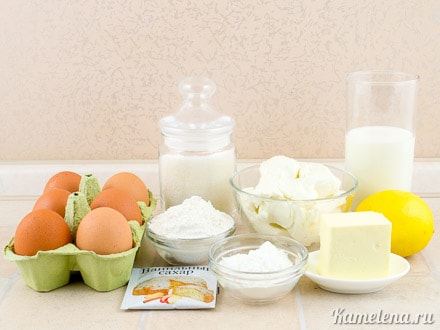
How to cook japanese cheesecake
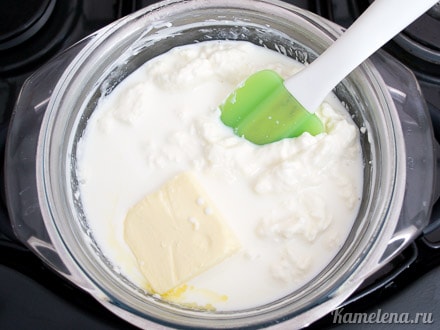
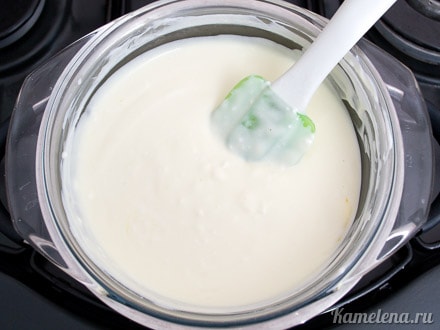
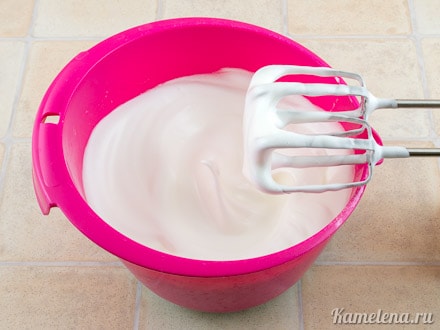
Beat the egg whites thoroughly for 7–12 minutes or longer, gradually adding half the sugar and the lemon juice, until stiff peaks form.
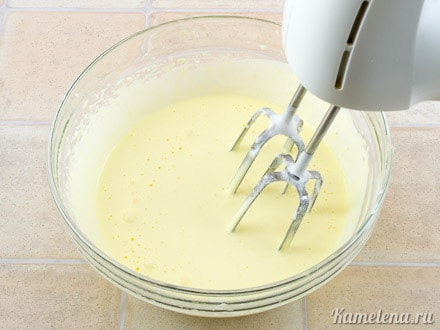
Beat the egg yolks thoroughly with the remaining half of the sugar, vanilla sugar, and salt. Beat until the mixture lightens significantly and increases in volume.
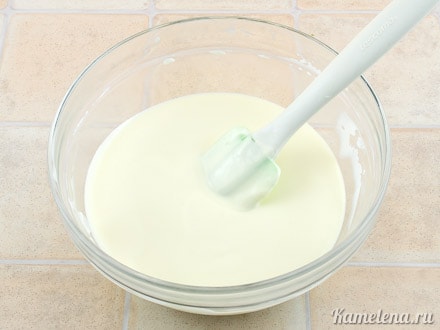
Add the cream cheese mixture to the yolks and gently fold together. Sift the flour and starch together. Add them to the yolk-cheese mixture in batches, folding gently with bottom-to-top sweeping motions.
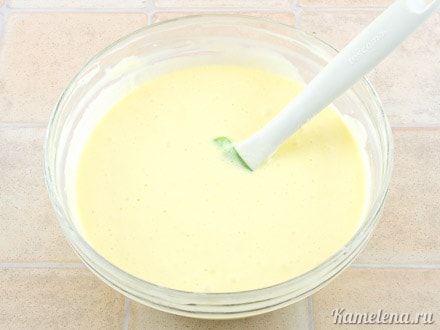
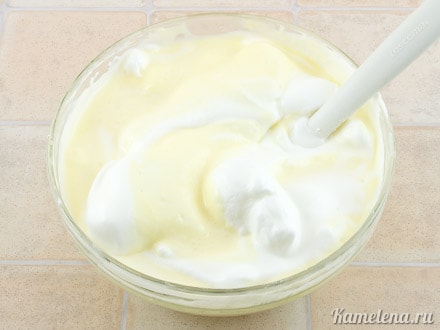
Next, gently fold in the egg whites in batches, using the same light bottom-to-top folding motion, being careful not to deflate the batter.
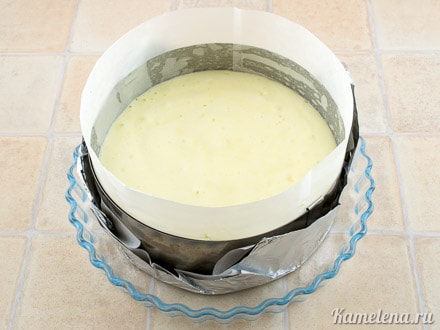
Prepare a springform pan, lining the sides and bottom with parchment paper as needed. I used a pastry ring set to 20 cm, with a base made from layered foil and parchment paper. Transfer the batter and smooth the top gently. Just as with a regular cheesecake, it's a good idea to use a water bath in the oven for the Japanese cheesecake as well. I poured boiling water into a baking sheet, placed a wire rack on top of the baking sheet, and set the pan with the cheesecake on the rack. This is a middle-ground approach — baking with steam but without submerging the pan in water. Place in an oven preheated to 160°C and bake for approximately 50–70 minutes.
Leave the finished cheesecake to cool in the oven with the door slightly ajar. Then remove the pan — it's highly recommended to let the cheesecake rest either overnight in the refrigerator or for at least 4–5 hours. This eliminates any eggy aftertaste and prevents the cheesecake from tasting like an omelet, which is a common complaint from those who skip this step.
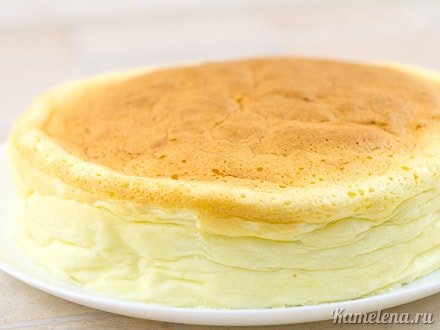
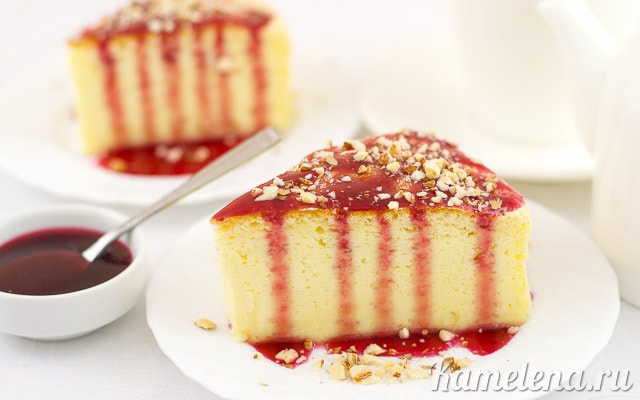
Before serving the cheesecake from the refrigerator, let it come to room temperature. And here's a look at the cross-section.
Japanese cheesecake pairs best with a pourable jam, caramel syrup, or something similar. It goes really well with toppings like these — I drizzled mine with raspberry jam syrup and sprinkled it with crushed nuts. Fresh berries or slices of fruit also work beautifully here. Japanese cheesecake is unusual, moist and airy, and of course absolutely delicious!
Comments