
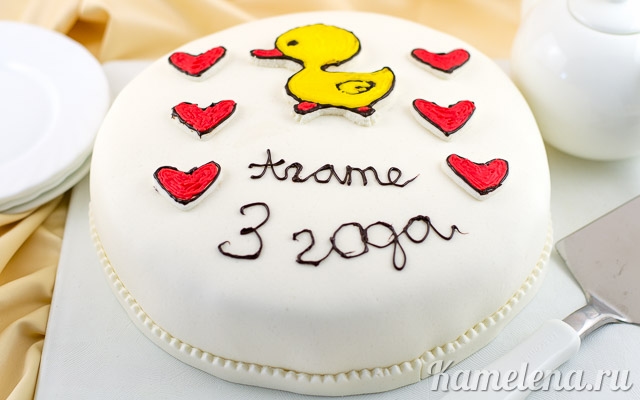
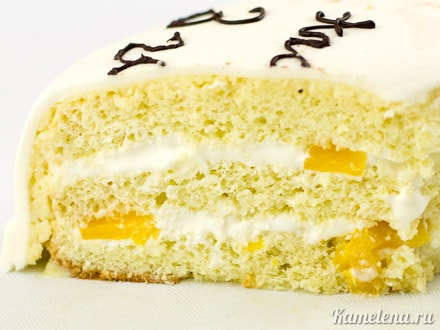
My daughter Agatha recently turned 3, and to celebrate this wonderful occasion I made a fondant-covered cake (I had been wanting to work with fondant for a long time, and this was the perfect excuse). I had envisioned the fondant as pure white from the start (like on wedding cakes) — I find it so fresh and light. Brightly colored fondants honestly scare me a little (just imagine how much food coloring goes into those, and kids are going to be eating this too). I used marshmallow fondant, which is the simplest and most accessible fondant to make at home. For the cake itself I used one of my favorite sponge cake recipes (from my Raffaello Cake), and made a cream from whipped heavy cream with sliced canned peaches. The combination of a soaked white sponge, whipped cream, and sweet peaches is one of my all-time favorites — it's just the kind of thing that everyone loves without exception. And I was right: the cake was a huge hit with my daughter and all the guests. The birthday party was a great success!
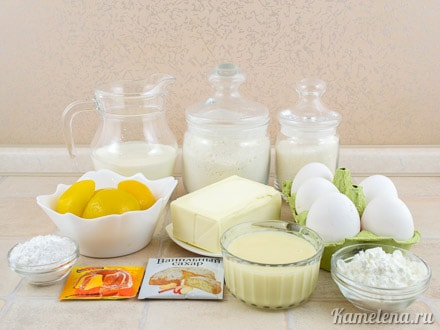
Ingredients:
- Sponge cake:
- 5 eggs
- 150 g sugar
- 100 g flour
- 30 g starch (I used cornstarch)
- 30 g butter
- 2 tsp vanilla sugar
- 1 tsp baking powder
- Cream:
- 250 g heavy cream 33-38%
- 25 g powdered sugar
- canned peaches (6 halves) + syrup for soaking
- Fondant:
- 200 g marshmallows ("chewy marshmallows")
- 300 g powdered sugar (approximately)
- 100 g starch (cornstarch)
- 2 tbsp lemon juice
- 1 tbsp butter
- 150 g butter + 150 g condensed milk (under the fondant)
How to cook kids' birthday cake with fondant
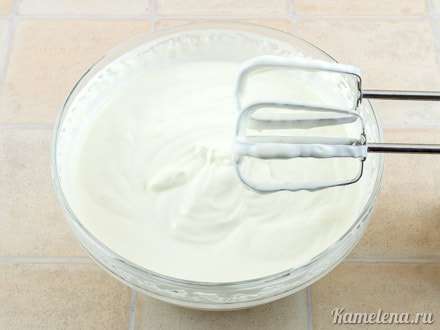
Make the sponge cake exactly as in the Raffaello Cake. Make the cream — whip the heavy cream to peaks, gradually adding powdered sugar, and whip to soft peaks. If you're not confident in your heavy cream, it's better to whip it with a special cream stabilizer.
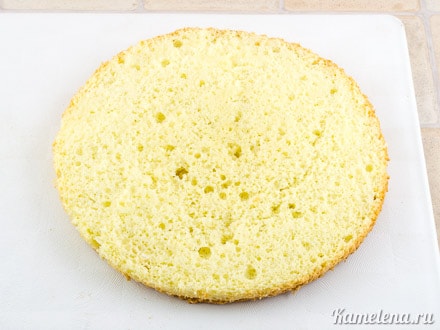
Assemble the cake. Place the first cake layer and soak it with the syrup from the canned peaches (about 5–7 teaspoons).
Spread half of the cream over the layer and smooth it out gently with a spatula. Arrange thinly sliced canned peaches on top (I used 3 halves).
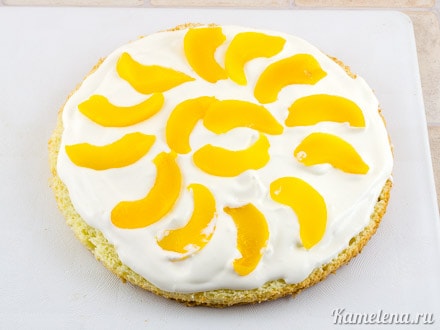
Place the second cake layer on top, soak it as well, cover with the second half of the cream (set aside 1–2 tbsp of cream), and arrange the remaining peaches on top. Cover with the third layer, soak it, and spread the reserved cream over the top and sides of the cake in a very thin layer — just enough to fill in any "pores." Refrigerate the cake for 1–2 hours.
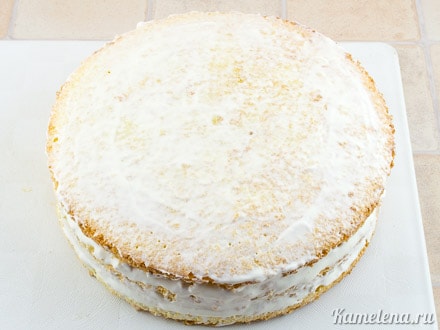
Now let's prepare the cake for the fondant. There's one important thing to know about fondant-covered cakes: fondant goes on best over cakes covered with buttercream or ganache. If the cake has whipped cream, sour cream, or another light and airy filling, you need to cover it with a suitable cream so the fondant sits properly and doesn't "slide." I used a buttercream made with condensed milk. To make it, beat very soft butter, gradually adding the condensed milk.
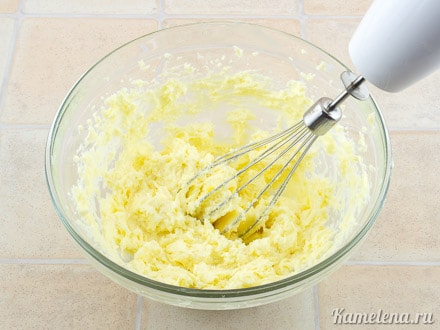
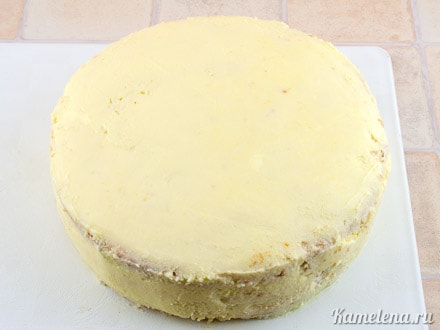
Spread half of the buttercream over the cake using a wide spatula or bench scraper. Apply it without pressing — more like gently patting it on. Refrigerate for 30–40 minutes to let the first coat set.
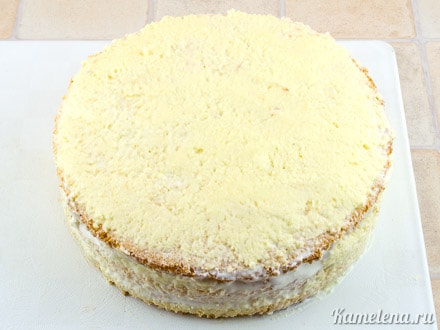
Then apply the second half of the cream. If your buttercream seems not pliable enough, microwave it for just 10–20 seconds and stir well (that's what I did for the second coat). Refrigerate the cake again for at least 30–40 minutes, or longer. The cake is now ready for fondant.
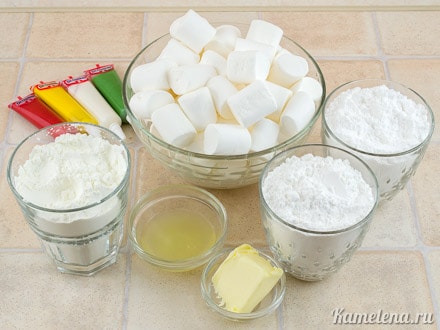
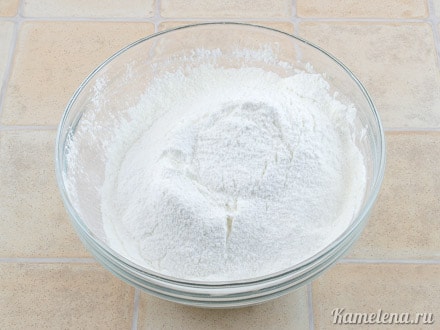
Sift the powdered sugar and starch together — this is important, there should be no lumps. Adding starch makes the marshmallow fondant more pliable and easier to work with than fondant made with powdered sugar alone.
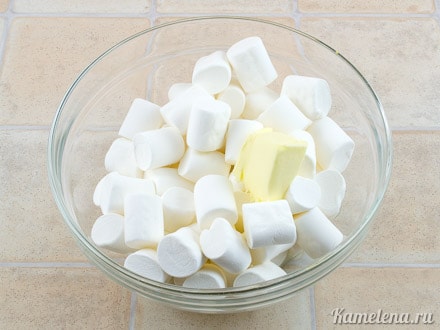
Melt in the microwave (the same way you melt chocolate): heat for 20–30 seconds, stir well, heat again, stir again, and repeat until smooth. Let it cool slightly. To get a snow-white fondant, you need to use pure white marshmallows, though multicolored ones are more commonly found in stores. You can use multicolored marshmallows too, but the fondant will have a tint — in that case, you can color it with food coloring to any shade you like (mix the coloring in at this stage).
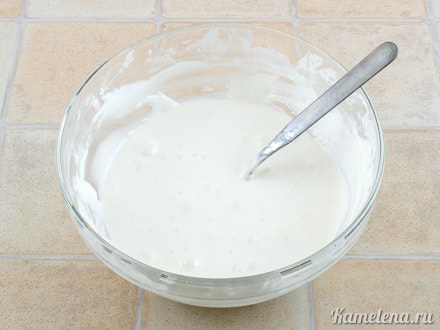
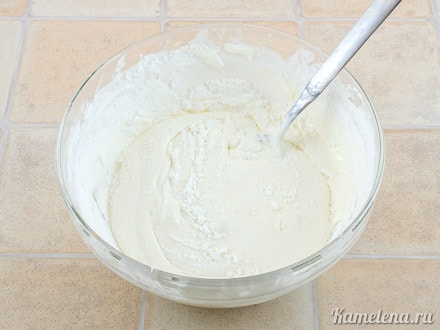
When it becomes too stiff to stir with a spoon, turn the mixture out onto a surface dusted with the same powder mixture and continue kneading. Knead thoroughly, like yeast dough, gradually adding more of the powdered sugar and starch mixture. I mixed 300 g of powdered sugar with 100 g of starch, and that was just enough for me — but add more powdered sugar if needed, or don't use all of the mixture. The finished fondant should stop sticking to your hands while remaining soft and pliable.
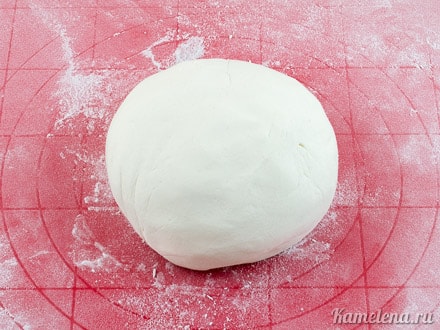
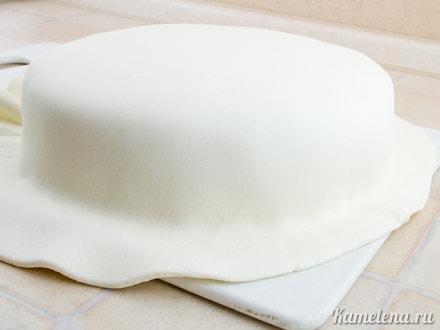
Roll the fondant out into one large circle big enough to cover the top, the sides, and still have some overhang. Mine came out to about 3 mm thick.
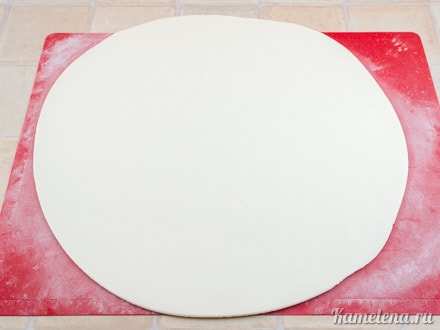
Wrap the fondant around the rolling pin and drape it over the chilled cake. Working your way around the cake, smooth the fondant down as shown in the photo. Do not press the fondant against the cake itself — only press it against the cake board or stand the cake is sitting on.
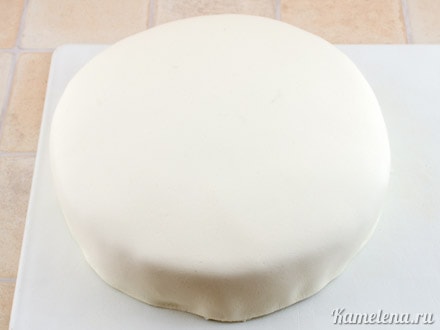
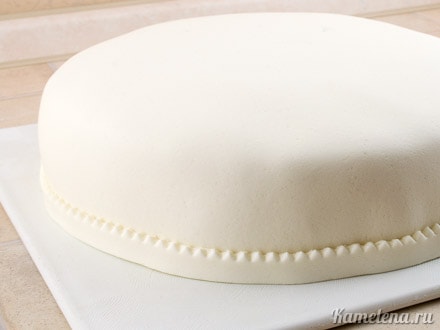
From the leftover fondant scraps, I cut a narrow strip with a fluted pastry wheel and used it to decorate the bottom edge of the cake (to "glue" fondant pieces together, simply moisten the area to be attached with a little water).
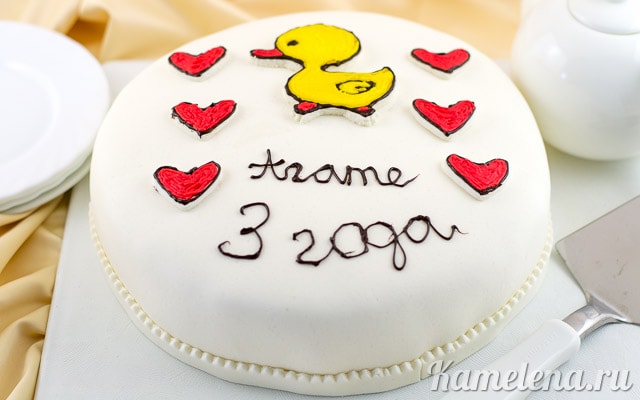
I decorated the cake late in the evening — you could even say in the middle of the night — while my daughter was already asleep (so she wouldn't see it before it was time). My husband even offered to help, probably feeling sorry for me for not going to bed :) From the leftover fondant, we cut out a little duck (using a printed template) and several hearts with cookie cutters. The duck's outline and the hearts were drawn with melted chocolate (piped from a small paper cone), and then the pieces were painted with colored sugar pens. The decorations were made separately and then "glued" to the cake with water. The inscription was also done with chocolate. It turned out so festive and lovely!
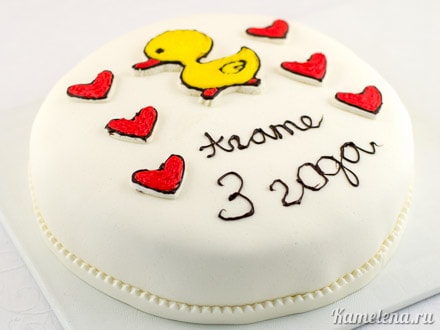

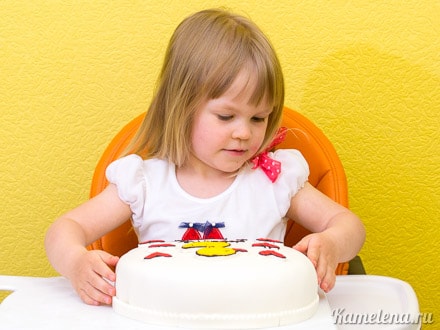
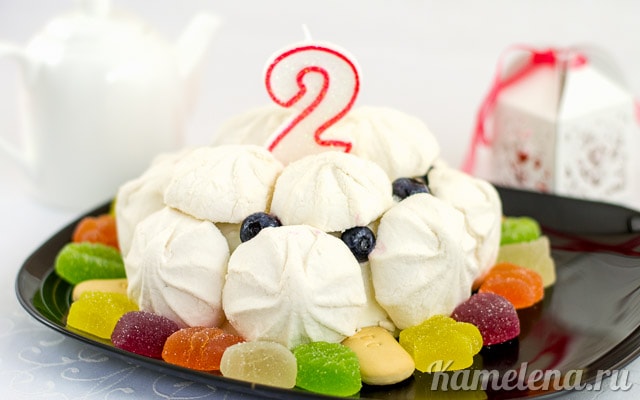
And here she is with the cake. By the way, here is her 1st Birthday Cake, and here is her 2nd Birthday Cake.


Comments