
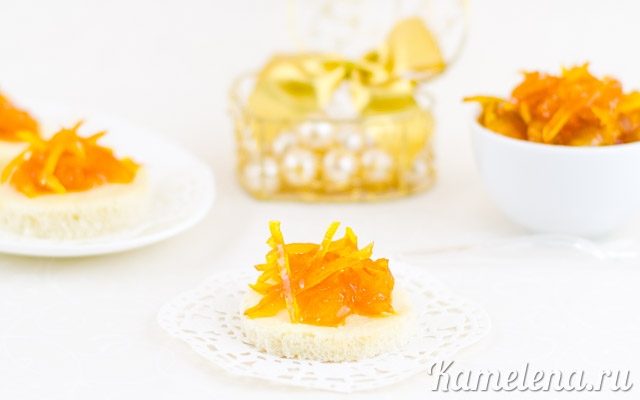
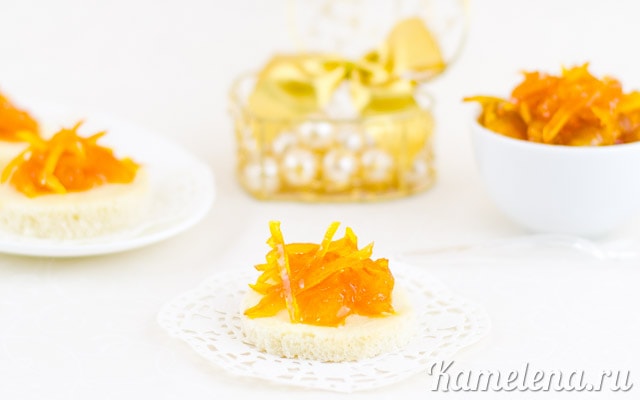
A delicious, thick, and wonderfully fragrant confit made from sunny oranges with the addition of zest. The word "confit" is of French origin and essentially refers to a type of thick jam with whole pieces of fruit. The confit can be served on buttered bread, alongside a roll at breakfast (that is, just like jam), or used with savory dishes — served with cheese, roasted meat, or chicken liver pâté (which is especially great if you're a foodie :-). The zest in this confit turns out incredibly tasty — it was my favorite part: saturated with orange juice, firm, and wonderfully fragrant. The hardest part of making orange confit is peeling the white pith from the oranges. It's not a quick task, but it's well worth the effort. Three oranges yield approximately 400 ml of confit.
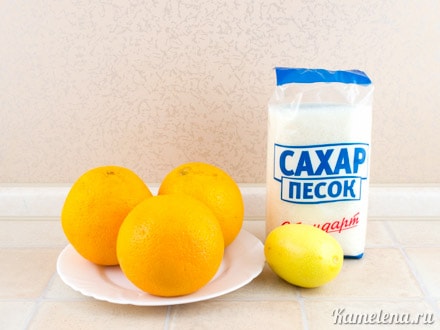
Ingredients:
- 3 oranges
- 3 tbsp lemon juice
- sugar
How to cook orange confit with zest
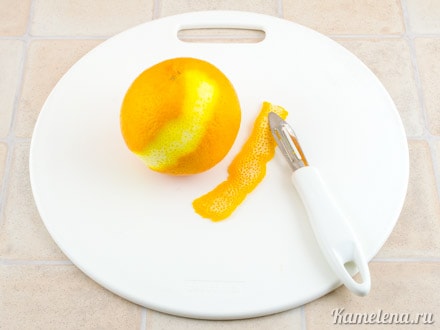
Using a vegetable peeler, remove the zest from each orange (the orange layer only). Peel the zest in long, wide strips, trying to leave as much of the white pith behind as possible.
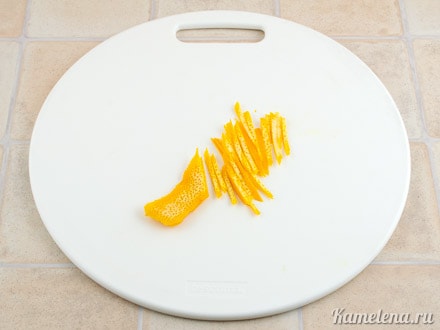
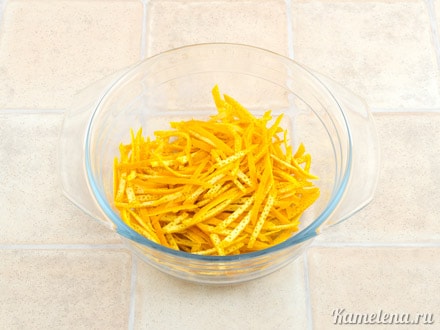
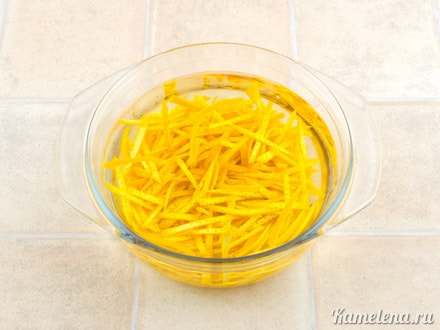
Cover with water and let soak for 24 hours (changing the water a couple of times during that period). This is done to remove any potential bitterness. Meanwhile, place the oranges in a bag and tie it closed so they don't dry out.
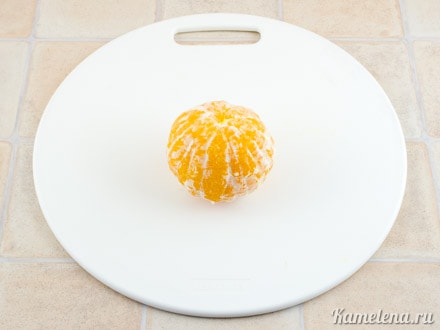
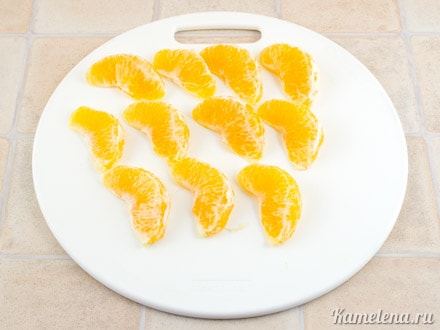


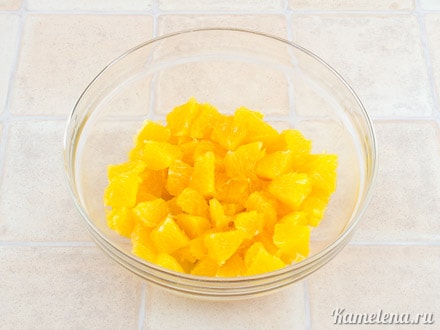
This is what you should end up with (you can use a knife to help). In theory, you can skip removing the white membranes, since it's the most labor-intensive step. I think it will still taste just as good, but the appearance of the finished product will definitely suffer.

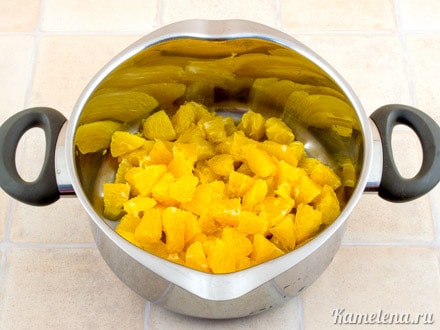
Cut each segment into three pieces. Next, weigh the total amount of fruit flesh and use 60 g of sugar for every 100 g of flesh. I ended up with 450 g of flesh and used 270 g of sugar.

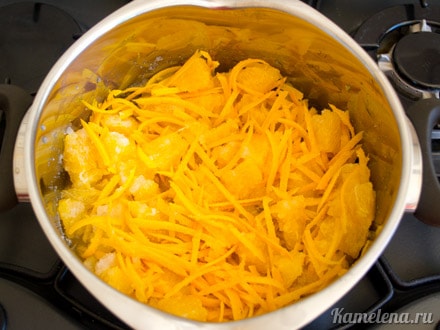
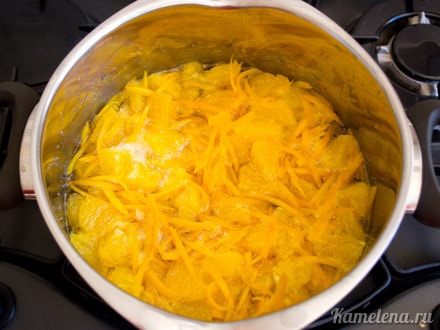
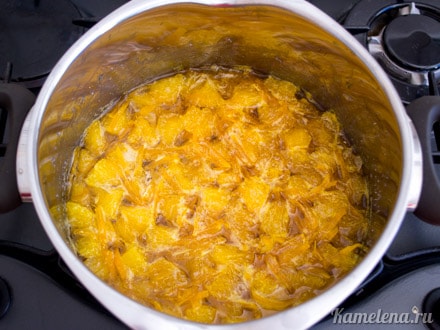
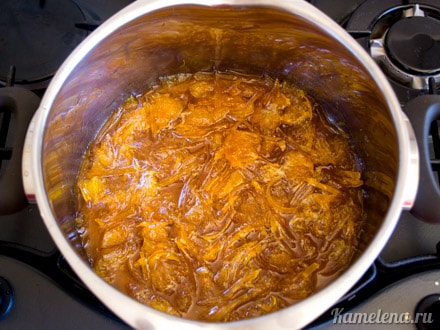
Then repeat the cooking process in the same way for another 30 minutes or so, then let cool. This is what it looks like after the second cook. Keep in mind that the consistency of the finished product will depend greatly on the cooking time — if you want a thinner confit, cook it for less time; the longer you cook it, the thicker the confit will be.


Comments