
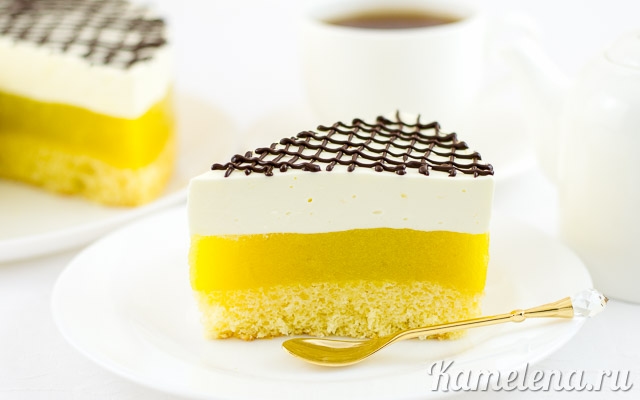
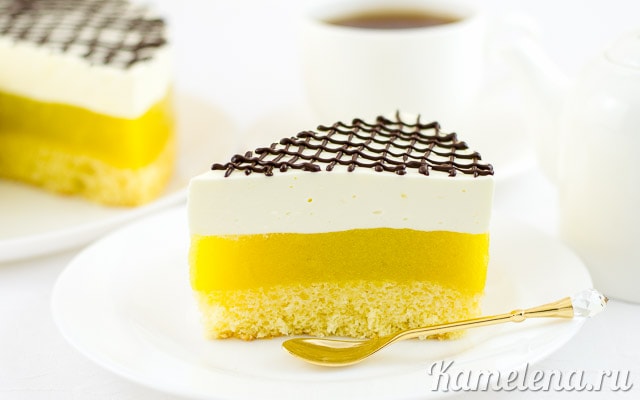
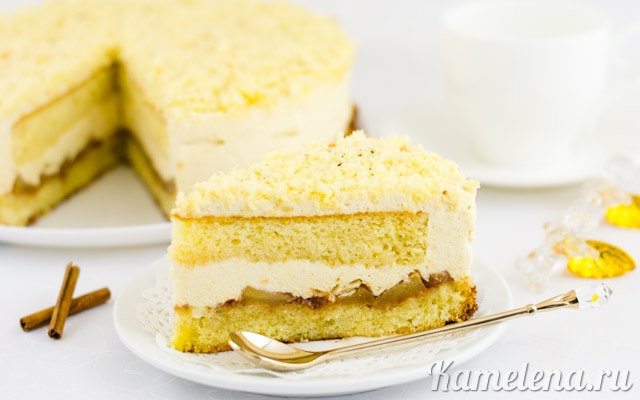
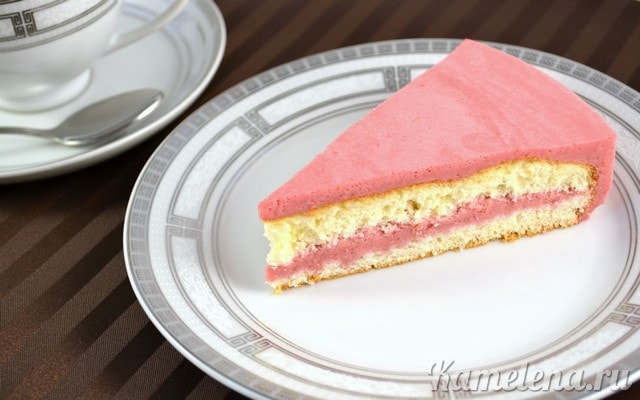
Apple baking season has arrived, and it inspired me to make something with apples. Usually apples go into pies, charlottes, and the like. But here, despite it being mid-September, the weather is still quite warm, so I wanted something light and cool at the same time. So today's recipe is a bit of a compromise — a sponge cake baked in the oven, while the other two layers are light, no-bake, and set with gelatin. I already have a — Apple Mousse Cream Cake on the site, and today's recipe is a variation of it, built on a sponge base with a tweaked apple mousse. By the way, I borrowed the sponge cake from this recipe of mine — "Cream Cloud" Cake with Strawberries. The cake turned out incredibly delicious — light, beautifully contrasted, and wonderfully "juicy." Every single layer is so delicate it just melts in your mouth. So good!
Ingredients:
- Sponge cake:
- 2 eggs
- 60 g sugar
- 40 g flour
- 10 g starch (I used cornstarch)
- 1 tsp vanilla sugar
- 0.5 tsp baking powder
- Soak:
- 2 tbsp water + 2 tsp lemon juice + 2 tsp sugar
- Apple mousse:
- 1 kg tart-sweet apples
- 1 packet lemon jello
- 1–2 tbsp lemon juice
- Cream mousse:
- 500 g heavy cream 30–33%
- 1–2 tbsp powdered sugar
- 7 g gelatin
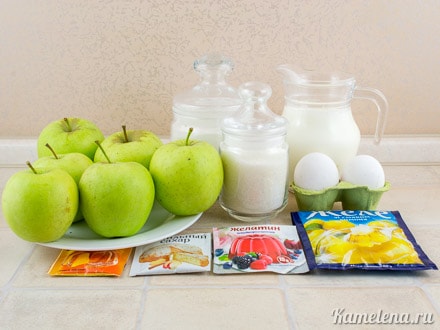
How to cook apple sponge cake with cream
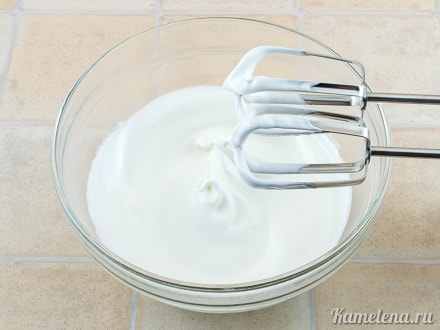
Make the sponge cake. Separate the eggs into whites and yolks. Beat the whites thoroughly, gradually adding half of the sugar, and whip to stiff peaks.
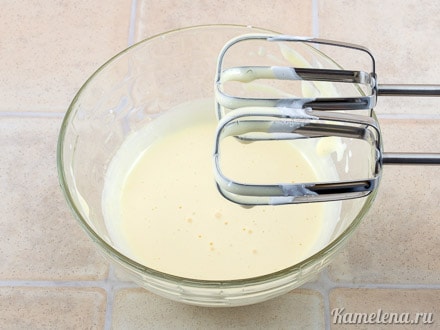
Beat the yolks thoroughly, gradually adding the remaining half of the sugar and the vanilla sugar, whipping until the mixture lightens significantly and increases in volume.
Gently fold the yolk mixture into the whites in portions, using light folding motions from the bottom up. Sift together the flour, starch, and baking powder. Add the dry mixture to the eggs in portions, each time carefully folding it in from the bottom up with a gentle motion, taking care not to deflate the batter. For baking, I used a 20 cm cake ring. Line the bottom and leave the sides ungreased. Transfer the batter and spread it out evenly. Bake in an oven preheated to 180°C (356°F) for approximately 15–20 minutes, or until a toothpick comes out clean. Once cooled, run a knife along the edge of the ring and remove the sponge cake.
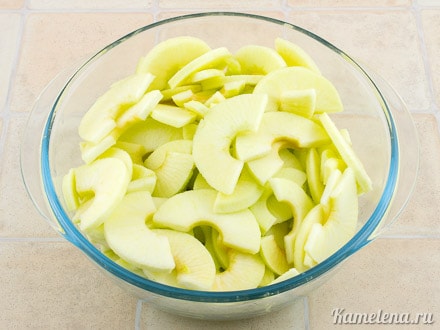
Make the apple mousse. Peel the apples, remove the cores, and cut into pieces. Sprinkle the apples with lemon juice as you cut them to prevent browning.
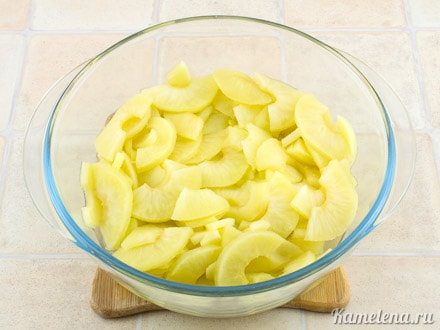
Blend thoroughly with an immersion blender, then press through a fine-mesh sieve to remove any remaining tough fibers. Starting with 1 kg of apples, I ended up with 500 g of finished purée.
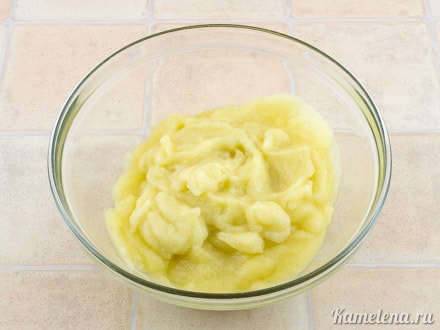
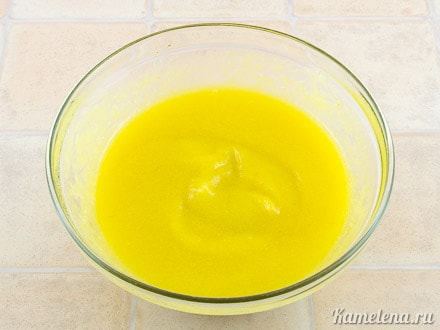
Dissolve the lemon jello in 100 ml of hot water, stirring thoroughly until completely dissolved. Pour the jello into the apple purée while mixing. Place the apple mixture in the refrigerator or freezer to thicken, stirring occasionally. The mixture should become thick enough that it won't soak into the sponge cake when poured over it.
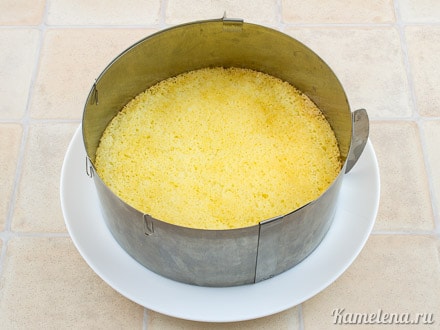
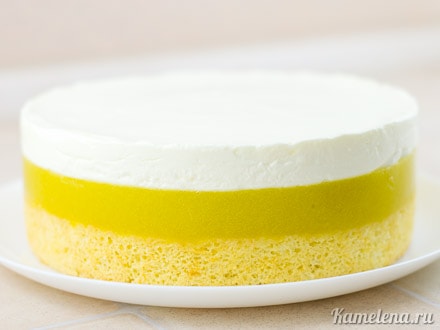
Assemble the cake. Place the sponge cake in a mold or ring, porous side up. Soak it with the prepared soaking syrup.
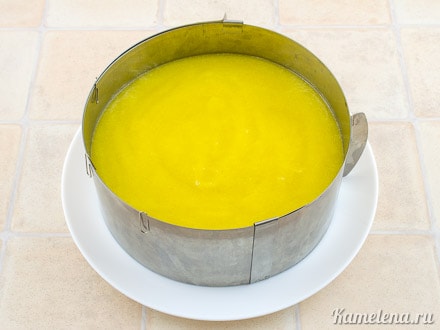
Spread the mousse on top and smooth it out. Refrigerate or place in the freezer until set. I usually use the freezer to speed things up, but you need to keep a close eye on it — I typically set a timer for 10–20 minutes and check whether the surface of the mousse has set. Don't leave the cake in the freezer for too long; it should not freeze solid.
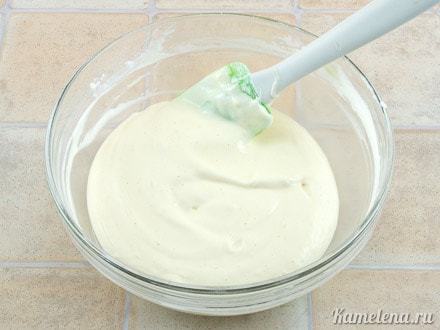
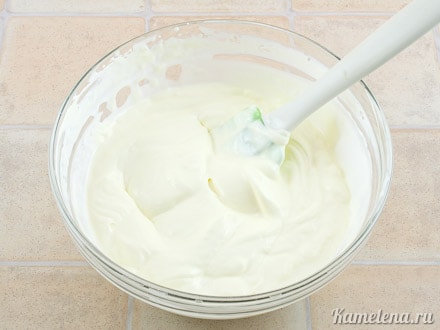
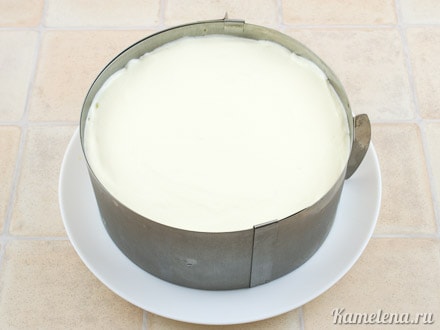
Make the cream mousse. Soak the gelatin in 3–4 tablespoons of water ahead of time and let it bloom. Then heat it until hot so the gelatin dissolves completely. Let it cool. Whip the heavy cream to a fairly thick consistency, adding the powdered sugar as you go. Then pour in the gelatin (pour it near the beaters while continuing to whip) and whip a little more. If the mixture turns out too thick, add 3–4 tablespoons of milk or low-fat cream.

Comments