
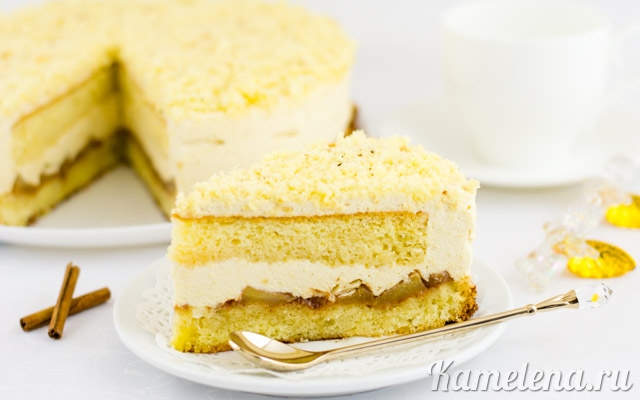
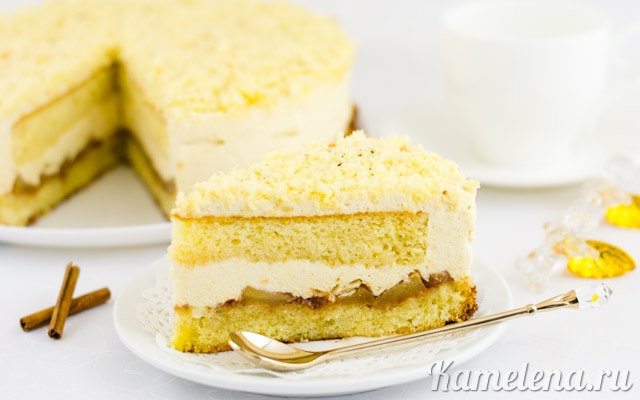
This is an incredibly delicious cake made up of a tender, moist soaked sponge, fragrant caramel apples with cinnamon, and a luxuriously light caramel mousse made from whipped heavy cream. The flavor is wonderfully unexpected — you can clearly taste the caramel notes of the mousse and the velvety softness of the apples, which are transformed almost beyond recognition once they're in the cake. I absolutely loved how it turned out; it's very hard to stop eating. If you follow the steps carefully, you'll end up with an incredibly delicate treat that doesn't even need a cup of tea to go with it. It's very important to choose the right apples — they should be sweet-tart and firm, so that after long braising they hold their shape while still becoming soft (I used green apple-pear variety). It's also important to soak the sponge thoroughly and evenly; I used unsweetened juice. If your juice is sweetened, use a little less sugar when baking the sponge. The finished cake is definitely on the sweet side — but then again, a cake should be sweet, that's what a cake is for :-) If you're not a big sweet tooth, feel free to reduce the amount of sugar. I think I've covered all the key details; we'll work through the rest as we go.
Ingredients:
- Sponge Cake:
- 4 eggs
- 120 g flour
- 150 g sugar
- 1 tsp baking powder
- Soaking Syrup:
- 200 ml apple juice (I used unsweetened juice)
- Caramel Apples:
- 400 g sweet-tart apples (I used green apple-pear variety)
- 50 g butter
- 50 g sugar
- 1 tsp ground cinnamon
- juice of half a lemon
- Caramel Mousse:
- 400 g heavy cream 33–38%
- 150 g sugar
- 150 ml milk
- 2 egg yolks
- 1 packet gelatin (10 g)

How to cook sponge cake with caramel apples
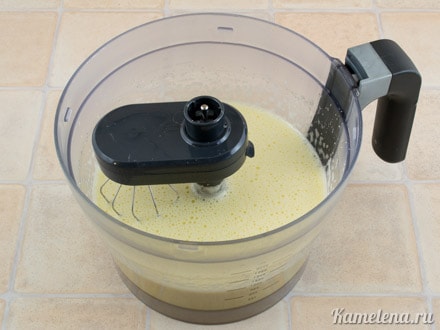
Make the sponge cake. Beat the eggs thoroughly for at least 5–7 minutes, gradually adding the sugar.
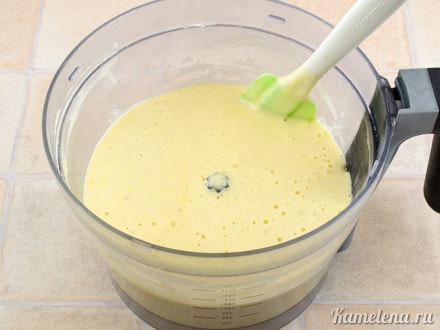
Sift the flour together with the baking powder. Add the flour in portions, gently folding it in from the bottom up, taking care not to deflate the air in the beaten mixture.
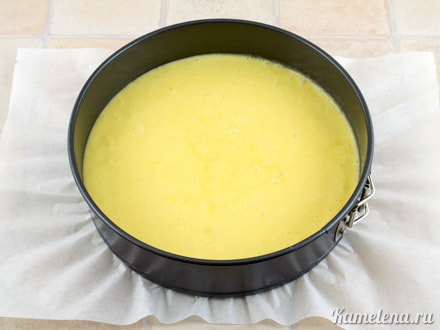
Line the bottom of a springform pan with a sheet of parchment paper and lock the pan shut (my pan is 22 cm in diameter). Pour in the batter and bake in an oven preheated to 200°C (400°F) for 20–25 minutes, or until a toothpick inserted in the center comes out clean.
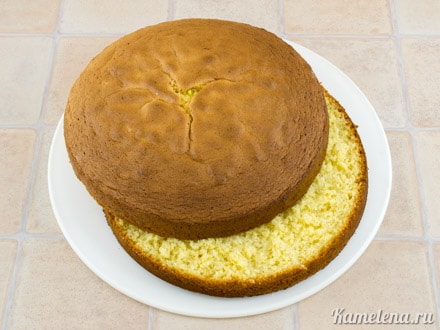
Let the finished sponge cool completely — it's best to leave it for a few hours or overnight. Then slice it into two layers.
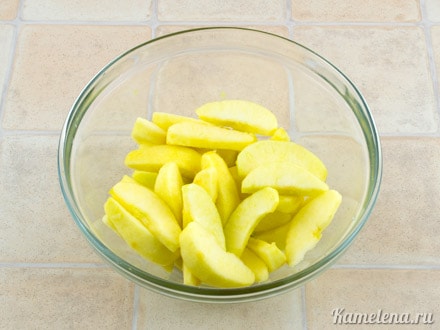
Make the caramel apples. Peel the apples, remove the cores, and cut them into medium-sized slices. Immediately drizzle them with the juice of half a lemon to prevent browning.
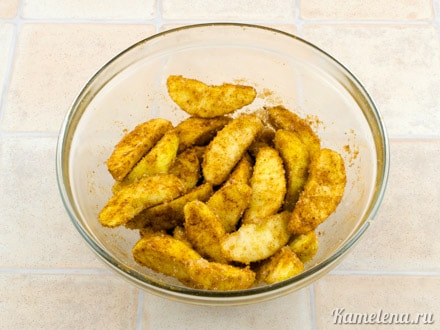
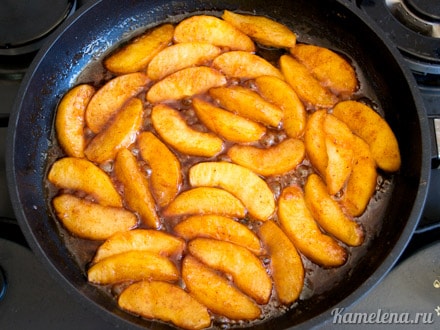
Melt the butter in a skillet over high heat, then add the apples. Cook over medium heat for about 3–4 minutes until the sugar dissolves. The mixture will bubble actively and the apples will become coated in caramel.

Reduce the heat to the lowest setting, cover with a lid, and braise for about 10–15 minutes. The apples should become very soft — almost creamy — while still holding their shape.
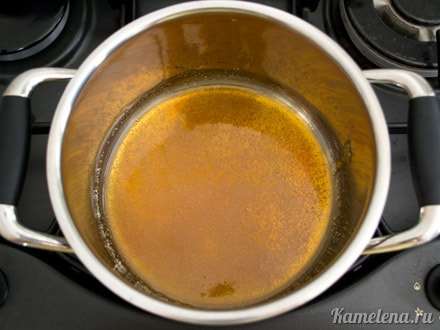
Make the caramel mousse. Spread 70 g of sugar in an even layer in a heavy-bottomed saucepan. Place over medium heat and, without stirring, cook the sugar until it reaches a light amber color. Pay close attention to the color — it should look like the photo. If it's already noticeably darker, the caramel has burned and will taste bitter, which is not what you want for this cake.
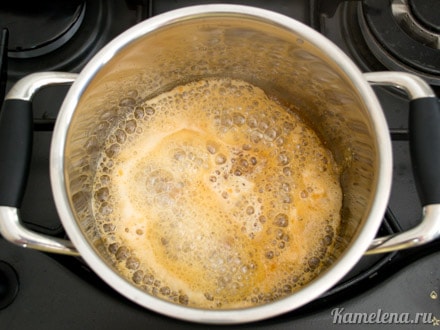
Gradually pour in the warm milk in a thin, steady stream (heat it ahead of time). The mixture will bubble up vigorously at first.
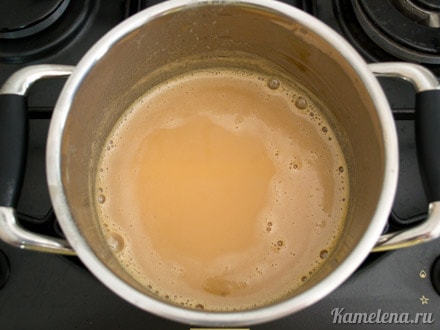
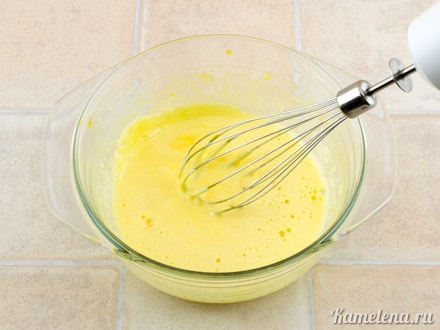
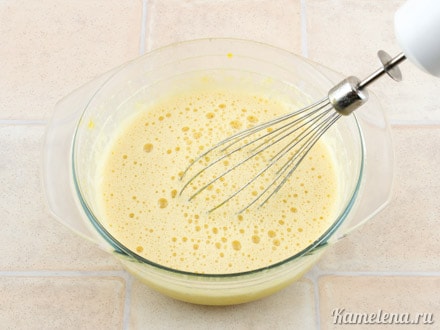
Pour the mixture back into the saucepan and cook, stirring, until slightly thickened. Do not let it come to a boil, or the egg yolks will curdle. Taste the finished custard — it should be pleasantly flavored with no hint of bitterness. Bloom the gelatin in 80 ml of water and let it sit for 10 minutes, or for the time indicated on the package (do this ahead of time if needed, before making the custard). Add the gelatin to the hot caramel custard and stir well until fully dissolved. Then let the custard cool.
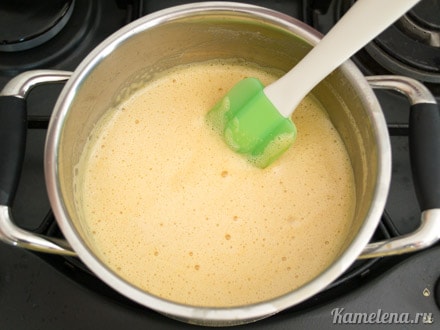
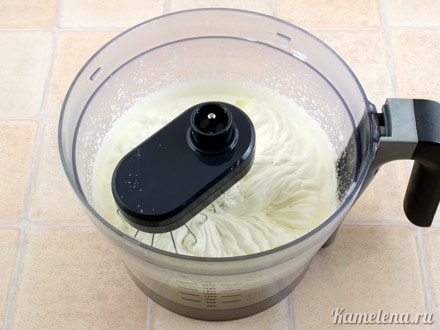
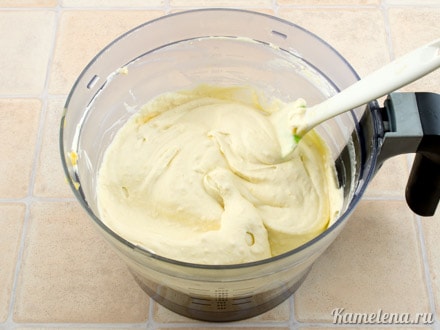
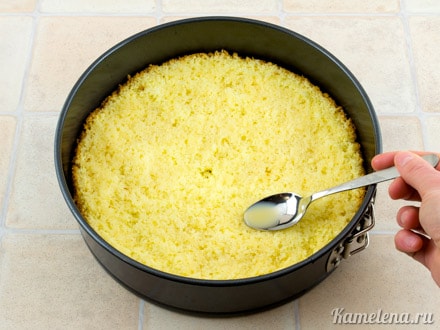
Assemble the cake. Place the first cake layer in the springform pan. Thoroughly and evenly soak the layer with half of the apple juice. I placed the top layer first. If the sponge rose with a dome, trim it flat with a long sharp knife beforehand.
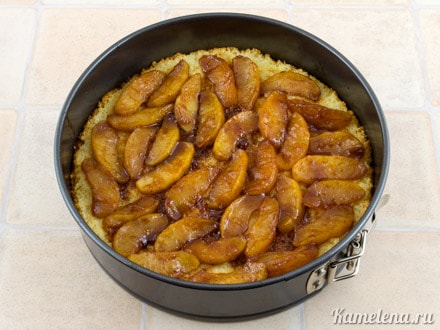
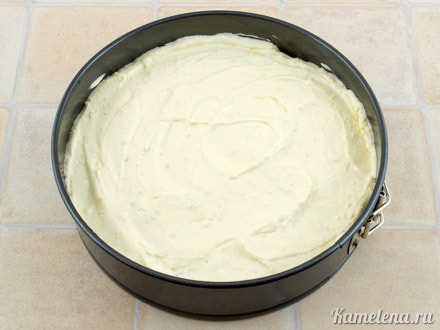
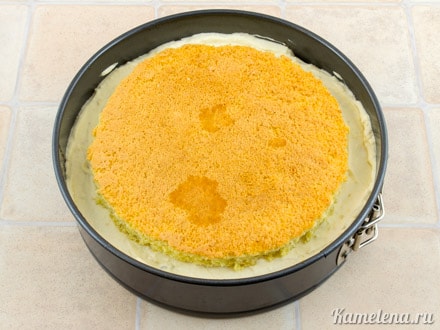
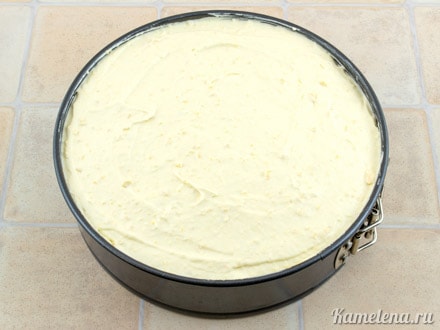
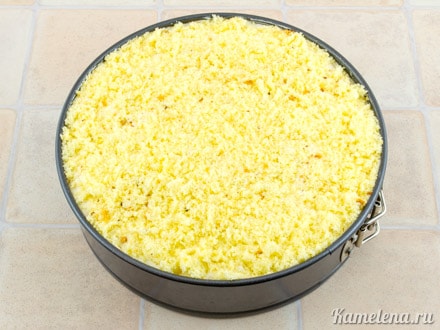
Place the second cake layer on top. I was worried that all the mousse wouldn't fit in the pan, so I trimmed the top layer by about 2 cm on all sides to make sure everything would fit. If your pan is larger in diameter, you can simply place the layer in whole, as usual. Before placing it, thoroughly soak the porous side of the layer with the second half of the apple juice.

Comments